
Blog

Why Choose a Trash Cabinet for Your Kitchen?

Why Choose a Trash Cabinet for Your Kitchen?

Kitchen waste is rarely a small problem. It collects beside the sink, smells quickly, and interrupts daily movement. A well-planned Trash Cabinet gives that waste a defined, concealed, and accessible location.

The U.S. Environmental Protection Agency reported that Americans generated about 292.4 million tons of municipal solid waste in 2018. That equals approximately 4.9 pounds per person each day. UNEP’s Food Waste Index Report 2024 estimated that households generated 631 million tonnes of food waste in 2022. Much of that waste begins in the kitchen.

Small design choices matter.

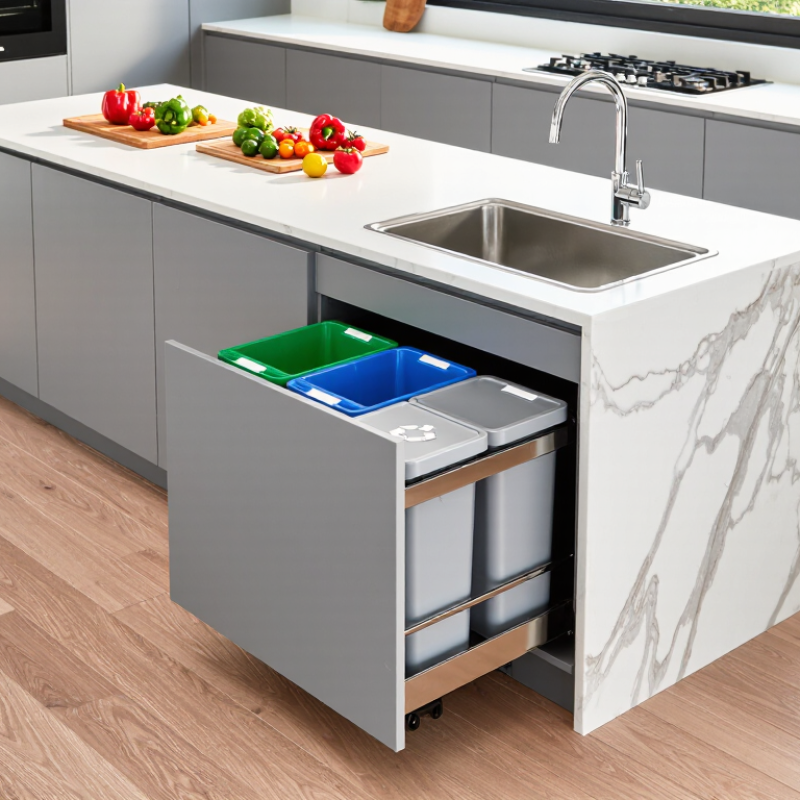
A pull-out cabinet can separate general waste, recycling, and compost near the preparation area. It can also reduce exposed bags, dripping containers, and unnecessary walking. However, cabinet storage does not reduce waste by itself. That limitation deserves attention. Better organization may even encourage larger containers and less frequent disposal.

William McDonough, a leading circular-design thinker, often states, “There is no such thing as away.” His principle suits kitchen planning. Waste does not disappear after the door closes.

Public reports rarely isolate Trash Cabinet performance as a separate category. Therefore, claims about guaranteed odor control or dramatic waste reduction should be treated cautiously. Real results depend on ventilation, liner quality, cleaning habits, and local recycling rules.

A practical Trash Cabinet should fit the household’s routine. Measure the opening carefully. Check the bin capacity. Leave room for cleaning. A cabinet that looks elegant but cannot hold a full week’s waste is not a successful solution. Good design is quieter, cleaner, and easier to question.
Why Choose a Trash Cabinet for Your Kitchen?

What Is a Kitchen Trash Cabinet?

Why Choose a Trash Cabinet for Your Kitchen?

A kitchen trash cabinet is a built-in storage unit designed to hide waste bins behind a cabinet door. Many models use pull-out tracks, while others use tilt-out fronts or removable containers. This design keeps bags, odors, and visual clutter away from food preparation areas. It also places waste disposal near the sink, where daily kitchen cleanup usually happens.

The U.S. Environmental Protection Agency reports that food waste represented about 24% of municipal solid waste in its 2018 Facts and Figures report. A dedicated cabinet can support better separation of food scraps, recyclables, and general waste. It cannot reduce waste by itself. That part still depends on household habits. The 2024 Houzz U.S. Kitchen Trends Study also found that 76% of renovating homeowners upgraded their kitchen cabinets. This suggests that storage planning remains central to modern kitchen design. However, a trash cabinet may feel cramped when the opening is narrow or the bin is too shallow.

Tips: Measure the bin, door swing, and plumbing space before ordering. Choose smooth, full-extension hardware for easier cleaning. Add a washable liner or removable container. Keep the cabinet away from direct heat. Test the pull-out motion with one hand. Small details matter. A slightly imperfect fit can cause daily frustration.

How Does a Trash Cabinet Improve Kitchen Organization?

Why Choose a Trash Cabinet for Your Kitchen?

How Does a Trash Cabinet Improve Kitchen Organization?

A trash cabinet turns an exposed bin into a planned work zone. Its pull-out mechanism keeps waste near the sink and prep surface. That small distance matters. The 2024 Houzz U.S. Kitchen Trends Study reports that 76% of renovating homeowners upgraded their cabinets. This demand reflects more than appearance. Better storage supports smoother routines, especially when hands are wet or full. A cabinet can also hide liners and spare bags. The kitchen looks calmer.

Organization improves when each container has a clear job. One bin can hold general waste, while another handles recycling or compost, where local collection allows. The U.S. Environmental Protection Agency reports that food made up 24.14% of municipal solid waste landfilled in 2018. Keeping a sealed food-waste container beside the sink can reduce drips across the floor. It may also make sorting easier. Not always. A narrow cabinet can become frustrating if the frame blocks large pans or the slides carry too little weight. Measure the opening, bin height, and door swing before buying.

Daily maintenance decides whether the system works. Choose removable bins with smooth interiors, then wipe spills before they harden. Soft-close hardware reduces noise during early-morning use. Ventilation still matters. A cabinet can contain clutter, but it cannot remove odors without regular cleaning. The National Kitchen and Bath Association’s 2024 Kitchen Trends Research emphasizes storage and functionality as major renovation priorities, yet real kitchens remain imperfect. Children overfill bins. Recycling gets misplaced. A clear label and an accessible liner shelf often help more than expensive fittings. The best arrangement is the one everyone can use without stopping to think.

Which Types of Trash Cabinets Suit Different Kitchen Layouts?

Why Choose a Trash Cabinet for Your Kitchen?

Different kitchen layouts need different trash cabinet solutions. In a narrow galley kitchen, a slim pull-out cabinet can save walking space. Place it near the sink, but leave enough room for the door to open fully. This location makes food preparation and cleanup more efficient. A 300–400 millimeter cabinet often works well, depending on the available clearance. Measure first. Small errors become annoying every day.

L-shaped kitchens offer more flexibility. A cabinet beside the sink can hold general waste, while a second compartment stores recycling. Keep both containers easy to reach from the main preparation area. In a kitchen with an island, an island-end cabinet may be practical. It avoids crossing the room with wet scraps. However, the cabinet should not block seating or narrow the walkway. A clear passage of about 900 millimeters is commonly more comfortable.

Compact kitchens may need a corner cabinet or a single deep bin. Corner units use difficult space, though their hardware can cost more and require careful adjustment. Families who cook frequently may prefer two smaller bins instead of one large container. This improves sorting and reduces unpleasant odors. I have found that oversized bins often become heavy before removal. That choice is not always convenient. Ventilation, washable surfaces, and soft-close hinges also matter. Yet, attractive features cannot replace accurate measurements and sensible daily access.

Why Choose a Trash Cabinet for Your Kitchen?

Recommended trash-cabinet width by kitchen layout

Pull-out trash cabinets keep waste concealed, improve workflow, and use standard base-cabinet widths efficiently. The ranges shown are practical planning recommendations: compact layouts generally benefit from 12–15-inch cabinets, while larger L-shaped, U-shaped, and island kitchens can accommodate wider 18–21-inch solutions. Final sizing should be checked against door clearance, plumbing, cabinet construction, and bin capacity.

What Materials and Features Should You Consider?

A kitchen trash cabinet should hide waste without trapping odors, moisture, or cleaning problems. Material choice matters more than appearance alone. The U.S. Environmental Protection Agency’s 2018 Wasted Food Report found that food made up about 24% of landfilled municipal solid waste. A cabinet must therefore handle wet scraps, leaking packaging, and frequent cleaning.

Powder-coated steel resists dents and wipes clean, while moisture-resistant plywood offers better repairability than ordinary particleboard. High-density plastic bins work well inside, especially when their edges seal against leaks. Avoid unfinished wood. It absorbs liquid quickly. In my experience, a removable inner container is more useful than a complicated automatic mechanism. It can be lifted out, rinsed, and replaced within seconds. Small details matter.

Capacity and ventilation deserve equal attention. WRAP estimated that UK households wasted 6.4 million tonnes of food in 2022, including 4.1 million tonnes of edible food. A split-bin design can separate food scraps from dry packaging, but only if each compartment remains easy to reach. Look for full-extension slides, soft-close hardware, adjustable dividers, and a lid that opens without touching the cabinet. I once chose a narrow bin for a compact kitchen; it filled too quickly and encouraged overflowing bags. That mistake still influences my recommendations. Measure the door swing, bin height, and cleaning clearance before installation.

How Do You Choose the Right Trash Cabinet for Your Needs?

Why Choose a Trash Cabinet for Your Kitchen?

How Do You Choose the Right Trash Cabinet for Your Needs?

Choosing a trash cabinet starts with your daily kitchen routine. Count how much waste your household creates during a normal week. A small household may need one 20–30 liter bin, while larger families often need more capacity. Think about food scraps, packaging, and recyclable materials. A pull-out cabinet suits frequent disposal, while a tilt-out design saves floor space. I have found that convenient access matters more than appearance alone.

Measure the cabinet opening carefully before buying anything. Check its width, depth, height, door swing, and nearby plumbing. Leave room for hinges and sliding hardware. A cabinet that looks suitable online may fail beside a sink. Choose a removable inner bin with smooth surfaces. It should resist moisture and allow quick washing. Odor control also depends on regular cleaning, not only on the cabinet design. This detail is easy to overlook.

Consider construction quality and installation safety. Strong runners should support the loaded bin without wobbling. Soft-close hardware can reduce noise, especially in open-plan homes. Ventilation helps, but it cannot replace a tight lid for wet waste. Separate compartments are useful only when your local collection system accepts them. I once underestimated the weight of a full food-waste container. That mistake made the cabinet difficult to open. Check the loaded weight, not just the empty bin.