
Blog

Top Inflatable Raft Boats for Sale Worldwide?

Choosing among the top Inflatable Raft Boat models for sale worldwide requires more than comparing prices. Construction quality, tube diameter, floor stiffness, load capacity, and warranty support can change the entire experience.

Market reports show steady commercial interest. Grand View Research estimates the global inflatable boats market will continue growing through 2030, supported by recreational boating, fishing, rescue training, and lightweight transport. IMARC Group reports similar expansion, although its market estimates differ. That difference matters. Industry data is useful, but it is never perfect.

Nigel Calder, a respected marine author and technical expert, offers a practical warning: “The sea is an unforgiving teacher.” His point applies directly to inflatable raft selection. A thin PVC hull may look attractive beside a calm lake, yet exposed seams can become vulnerable around sharp rocks, strong sunlight, or repeated inflation. A reinforced drop-stitch floor can feel firmer under wet feet. Oversized valves can also make packing faster after a long day on the water.

This guide compares leading Inflatable Raft Boat options across international markets. It considers materials, certifications, carrying comfort, repairability, and real-world handling. ISO 6185 standards provide an important reference, but certification alone does not guarantee the best match for every buyer. A compact raft may suit a weekend angler. A wider model may better support three adults and their equipment.

Some rankings remain debatable. Personal skill, water conditions, and storage space can change the result. That is why we examine both measurable specifications and practical ownership details before recommending any model.
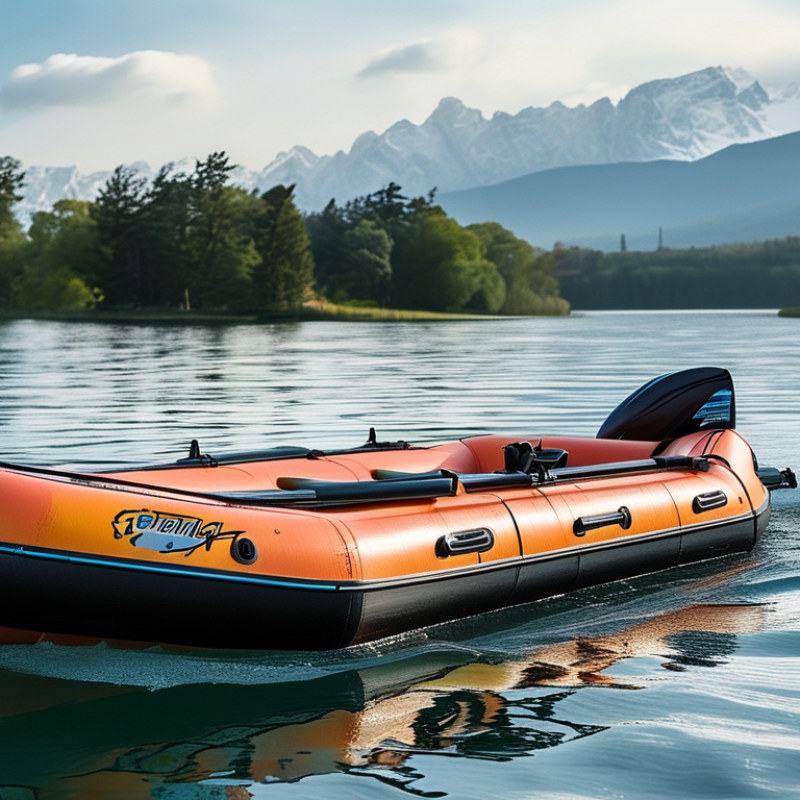
Top Inflatable Raft Boats for Sale Worldwide?

Define Inflatable Raft Types by ISO 6185 and 2–10-Person Capacity

Inflatable raft selection starts with ISO 6185, not a seller’s “best boat” label. ISO 6185-1 covers inflatable boats with maximum engine power up to 4.5 kW, including manually propelled models. ISO 6185-2 addresses higher-powered boats, generally from 4.5 to 15 kW. ISO 6185-3 applies to larger power ranges. Construction still matters: open-floor rafts pack easily, air-deck models improve comfort, and self-bailing designs handle splashing water better. These categories are different from passenger capacity.

A two-person raft suits calm lakes, fishing, and short trips with limited equipment. Four- to six-person models offer more usable space for coolers, dry bags, and safety equipment. Eight- to ten-person rafts need careful loading.

The advertised capacity includes people and gear, not just passengers. Check the plate, maximum load, tube diameter, floor design, and recommended power. It is easy to overestimate space.

The NMMA 2023 Recreational Boating Statistical Abstract recorded about 11.6 million registered recreational boats in the United States. That figure shows strong participation, but it does not prove every inflatable raft fits every waterway. Independent market reports also describe steady growth in inflatable boat demand, driven by portability and storage savings. However, capacity labels remain imperfect. A ten-person raft may feel crowded with wet clothing, fishing equipment, and emergency supplies. Experienced buyers should compare usable floor area, not marketing numbers alone.

Compare PVC and Hypalon Fabrics by 0.7–1.2 mm Thickness Standards

When comparing inflatable raft boats for sale worldwide, fabric thickness deserves close attention. PVC fabrics commonly range from 0.7 to 1.2 mm. Hypalon-type CSM fabrics often occupy similar thickness ranges, but their coating structure changes performance. ISO 6185-3:2014 emphasizes construction, buoyancy, seams, and intended operating conditions, not thickness alone.

A 0.7 mm PVC hull feels lighter and folds more easily. It suits sheltered water and frequent transport. At 1.0–1.2 mm, PVC generally offers better abrasion resistance and stronger seam margins. Hot-air or high-frequency welding can simplify production and repairs. Cold weather remains a concern. Some PVC becomes stiff, then cracks after repeated folding.

CSM fabric, commonly called Hypalon, usually handles sunlight, fuel splashes, and heat more reliably. ASTM D751 provides recognized methods for testing coated-fabric tear strength, adhesion, and hydrostatic resistance. These tests matter more than a sales sheet claiming “heavy duty.” A 0.7 mm CSM tube may still outperform thicker PVC under ultraviolet exposure, depending on reinforcement and seam quality. The trade-off is real: CSM is often heavier, costlier, and more dependent on careful adhesive repairs. My practical caution is simple: measure thickness at several points, inspect valve patches, and ask for test results. One reading can mislead.

The chart compares theoretical polymer coating mass at common 0.7–1.2 mm thicknesses. Values are calculated from representative densities of 1.40 g/cm³ for PVC and 1.50 g/cm³ for CSM, using coating mass = density × thickness. Actual finished-fabric weight also depends on the reinforcing scrim, fillers, and manufacturing process.

Evaluate Raft Safety Through CE, ISO 6185, and USCG Compliance

When comparing inflatable raft boats for sale worldwide, safety paperwork deserves the same attention as price and capacity. CE marking can indicate conformity with applicable European safety requirements, but it is not a universal quality guarantee. Check the declaration, model number, builder details, and covered standards. A loose label means little.

ISO 6185 is more useful when matched to the raft’s design and intended use. It addresses construction, materials, buoyancy, and basic safety expectations for inflatable boats. Inspect the actual craft, not just the certificate. Look at welded seams, airtight valves, pressure ratings, grab lines, and the floor’s stiffness. Ask whether the stated passenger load includes fuel and equipment. It should.

USCG compliance requires careful wording. Requirements may vary by boat type, length, equipment, and operating waters. Confirm flotation, capacity plates, navigation lights, reflective markings, and required safety gear with current official guidance. A seller’s phrase, “USCG approved,” can be too broad. Request written evidence for the exact model.

I have learned that attractive tubes can hide weak fittings. Small details matter. Press each valve. Examine every seam. Check the repair kit. A raft may meet one standard and still be unsuitable for cold water, strong currents, or overloaded use. Certification supports a buying decision, but practical inspection and honest operating limits remain essential. Some documents are difficult to interpret, and that uncertainty should encourage more questions, not quick trust.

Top Inflatable Raft Boats for Sale Worldwide? - Evaluate Raft Safety Through CE, ISO 6185, and USCG Compliance

Ranked by common use case rather than by brand. Product dimensions, capacity, and power ranges are indicative market categories; always verify the individual boat’s plate, manual, certification file, and local operating rules before purchase.

Rank / Inflatable Boat Category Typical Length Typical Rated Capacity Typical Propulsion Best-Fit Use CE / RCD Safety Review ISO 6185 Review USCG Considerations Key Pre-Purchase Checks
1. Compact Tender / Dinghy 2.4–3.6 m
7.9–11.8 ft
2–5 persons Oars or small outboard motor; commonly up to 4.5 kW Boat tendering, sheltered-water transport, short recreational trips Check CE marking
Confirm the applicable Recreational Craft Directive design category and the builder’s Declaration of Conformity.
Usually applicable
Confirm that the stated ISO 6185 part matches the boat’s propulsion arrangement and maximum permitted power.
Applicable equipment rules
Use properly sized USCG-approved personal flotation devices in United States waters and follow applicable capacity and equipment requirements.
Capacity plate; maximum persons and load; maximum engine power; inflation pressure; air-holding test; oarlocks; tow points; repair kit.
2. Family Day-Boat Inflatable 3.0–4.5 m
9.8–14.8 ft
4–8 persons Outboard motor; commonly up to 15 kW in this size class Inshore cruising, lakes, rivers, swimming access, family recreation Review design category
Category D is generally associated with sheltered waters, while Category C covers inshore conditions. The actual category must be shown in the conformity documentation.
Verify standard reference
Check the declared ISO 6185 edition or part, rated load, maximum power, and operating limitations.
USCG rules vary by use
Check PFD carriage, sound-producing device, navigation lights when required, visual distress signals, and fire-safety equipment where applicable.
Hull and tube material; pressure-relief valves; non-slip deck; grab lines; drain system; transom bonding; steering and fuel-system condition.
3. Rigid Inflatable Boat (RIB) 3.5–5.5 m
11.5–18.0 ft
4–10 persons Outboard or inboard propulsion; power varies widely by design Coastal recreation, patrol support, diving, fishing, fast transport Higher-category review
For coastal or offshore use, confirm the declared CE design category, stability information, steering system, fuel system, and emergency arrangements.
Confirm power range
ISO 6185 applicability depends on the boat design and propulsion power. Do not rely on a generic “ISO compliant” statement without the applicable technical reference.
No general recreational “USCG approval”
In the United States, verify required safety equipment, navigation lights, capacity information where applicable, and engine or fuel-system compliance.
Tube-to-hull attachment; stringers and transom; fuel ventilation; emergency kill switch; bilge drainage; navigation lights; console and steering integrity.
4. Whitewater Raft 3.0–4.6 m
9.8–15.1 ft
4–10 persons Usually paddle-powered; some designs use a small outboard River running, guided rafting, adventure tourism, moving-water recreation Use-specific review
Check the declared operating limits, stability information, passenger arrangement, and whether the certification covers the intended water environment.
Relevant inflatable-boat benchmark
Verify material strength, air-compartment arrangement, valves, grab lines, rated load, and the applicable ISO 6185 scope.
Check local requirements
USCG-approved PFDs are required for applicable recreational use in U.S. waters; state and river authorities may impose additional rules.
Separate air chambers; high-pressure floor or self-bailing floor; reinforced wear strips; perimeter grab line; repair materials; flip and recovery provisions.
5. Fishing / Utility Inflatable 3.2–5.0 m
10.5–16.4 ft
3–8 persons Oars, electric motor, or outboard motor Fishing, maintenance work, marina service, equipment transport Confirm intended service
A boat certified for sheltered recreational use may not be suitable for commercial, workboat, or exposed-water operations.
Check load and power limits
Confirm the ISO 6185 reference, maximum load, maximum persons, and maximum engine power on the identification plate.
Equipment-focused compliance
Check required PFDs, lights, sound signals, distress equipment, and fire protection based on vessel size, operation, and location.
Reinforced floor; lifting points; load distribution; tube abrasion resistance; electrical protection; battery installation; storage and drainage.
6. Rescue / Professional Inflatable Boat 3.6–6.0 m
11.8–19.7 ft
6–12 persons Outboard motor; power selected for rescue load and operating conditions Rescue support, emergency response, water-safety operations, professional use Check sector-specific rules
CE recreational-boat conformity may not cover public-service or commercial rescue operations. Request the complete technical and operational documentation.
Verify construction scope
Check applicable ISO 6185 provisions together with any occupational, rescue-service, or national authority requirements.
Verify operating authority
USCG equipment rules may be supplemented by local, state, commercial, or agency requirements. Confirm PFD, lighting, distress, and communications provisions.
Heavy-duty tubes; multiple independent chambers; lifting and towing points; self-bailing system; high-visibility markings; emergency boarding; documented load testing.
7. Emergency Inflatable Liferaft Typically 2.0–4.5 m
6.6–14.8 ft
4–25+ persons, depending on certified pack size Designed for emergency survival; not a normal recreational boat Abandon-ship survival, offshore emergency evacuation, regulated maritime operations Different certification pathway
Do not treat a recreational CE inflatable boat as an approved liferaft. Verify the specific marine-safety certification required for the intended vessel and voyage.
Not the primary benchmark
Recreational inflatable-boat standards such as ISO 6185 should not be substituted for liferaft-specific standards and servicing requirements.
Verify vessel-specific rules
Required liferaft type, capacity, location, servicing interval, and equipment depend on vessel class, route, and applicable U.S. regulations.
Pack capacity; hydrostatic release where required; service date; inflation system; canopy; ballast pockets; emergency supplies; approved servicing station.
Compliance note: CE marking is a manufacturer’s declaration of conformity with applicable European requirements; it is not a universal guarantee of seaworthiness. ISO 6185 is a technical standard for inflatable boats, and the applicable section depends on the boat’s design and propulsion characteristics. The U.S. Coast Guard generally regulates vessel safety equipment and operating requirements rather than issuing one universal approval for every recreational inflatable boat. Always compare the identification plate, owner’s manual, Declaration of Conformity, test documentation, and the rules of the country where the boat will be operated.

Rank Worldwide Models by 300–2,000 lb Load and 2.5–20 hp Power

When comparing inflatable raft boats for sale worldwide, rank them by usable load, not advertised capacity alone. Entry models carrying 300–600 pounds suit two adults and light gear, usually with 2.5–5 hp engines. Their narrow tubes pack easily, but wind can change handling quickly. I have found floor stiffness matters more than glossy specifications. A soft floor can make boarding awkward, especially beside a dock.

Mid-size rafts rated for 700–1,200 pounds offer better balance for fishing, family transport, or short coastal trips. A 6–10 hp motor provides controlled acceleration without making the hull feel nervous. Look for reinforced seams, separate air chambers, and a drainable floor. These details indicate thoughtful construction. Yet ratings differ between manufacturers, so compare testing methods carefully. That part is often unclear.

The largest portable models, carrying 1,300–2,000 pounds, generally need 15–20 hp power and two operators during launching. They suit heavier equipment and longer crossings, provided the transom accepts the engine weight. Check maximum persons, engine limits, and local registration rules before buying. Higher horsepower does not guarantee safer travel. Inspect valves and repair patches in person when possible. Online photos can hide small damage. Include fuel, batteries, and safety equipment in the load calculation. Room for growth can become unnecessary weight.

Assess Prices, Shipping, Warranties, and Regional Dealer Support Globally

Top Inflatable Raft Boats for Sale Worldwide?

Price comparisons should include more than the advertised figure. A compact inflatable raft may cost less, yet overseas freight, import taxes, payment fees, and storage can change the final amount. Request a written quote showing the boat, accessories, delivery charge, and estimated arrival time. Check the packed dimensions carefully. A smaller parcel may reduce shipping costs significantly.

Shipping reliability varies by region. Ask whether delivery reaches your home, a port, or a local depot. Confirm tracking, damage procedures, and seasonal delays before paying. In remote areas, a regional dealer can provide practical value through local assembly checks, spare valves, repair kits, and safety advice. That support may matter more than a modest discount. It depends on your location.

Warranty terms require close reading. Look for coverage periods, inflation chambers, seams, valves, oars, and air pumps. Some warranties cover manufacturing defects but exclude abrasion, improper storage, or saltwater exposure. Ask who pays return freight and whether approved repairs are available locally. Keep invoices, photographs, and inspection records. These details can protect a legitimate claim.

Dealer support also reveals a seller’s reliability. A knowledgeable representative should explain load capacity, material thickness, repair limits, and suitable water conditions without exaggeration. Independent reviews help, but they are not perfect. I would compare at least three regional offers and verify after-sales response times. The cheapest option can become expensive when one replacement part crosses an ocean.