Blog

Top 10 Types of Fabric Window Curtains for Global Buyers

Choosing the right fabric window curtains is rarely a simple matter of color. Global buyers must consider climate, daylight, privacy, maintenance, shipping weight, and room function. A linen curtain may feel cool and relaxed in a coastal home. It may wrinkle heavily in a humid market. Velvet can provide warmth and drama, yet it may collect dust and increase freight costs. Small details matter.

British designer and textile pioneer William Morris advised, “Have nothing in your houses that you do not know to be useful, or believe to be beautiful.” That principle still guides practical curtain selection. This guide examines ten widely used fabric types, including linen, cotton, velvet, polyester, silk, blackout blends, jacquard, sheer voile, chenille, and recycled textiles. Each section considers texture, light control, durability, care requirements, and suitability for different buying environments. No single fabric wins everywhere.

That is worth remembering.

From sourcing experience, sample testing is more reliable than product photos. Hold each swatch near a window. Check its drape after steaming. Rub the surface gently. Look for color changes under morning and evening light. Buyers should also confirm fiber content, shrinkage rates, seam quality, and applicable local textile or fire-safety requirements. Standards vary across markets. A useful comparison can still oversimplify real homes, because humidity, washing habits, and installation methods change performance. This overview offers a careful starting point, not a perfect verdict.
Top 10 Types of Fabric Window Curtains for Global Buyers

How Fabric Window Curtains Are Classified by Style and Function

Top 10 Types of Fabric Window Curtains for Global Buyers

How Fabric Window Curtains Are Classified by Style and Function

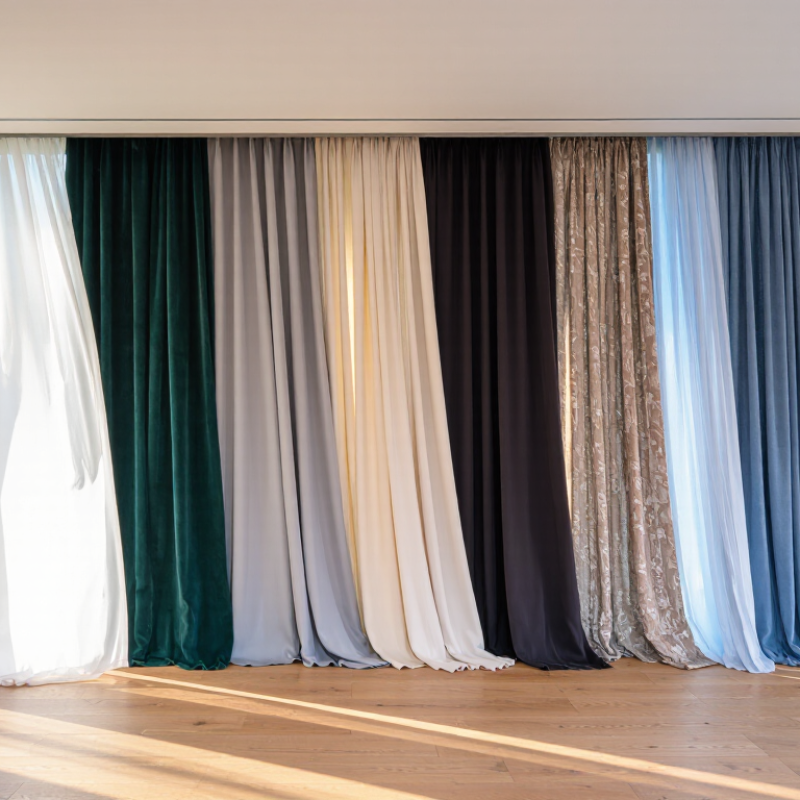
Fabric window curtains are commonly classified by appearance, construction, and practical performance. Sheer curtains soften daylight and protect privacy without darkening a room. Blackout curtains block strong sunlight and support better sleep. Thermal curtains help reduce heat loss near cold glass. Linen curtains create a relaxed, natural texture, while velvet curtains offer heavier insulation and a formal appearance. Cotton curtains remain popular for their washable feel and flexible styling.

Curtain style also affects installation and daily use. Eyelet curtains slide easily on a rod and suit modern interiors. Pinch-pleat curtains create a structured, tailored look. Pencil-pleat curtains fit many track systems and offer adjustable fullness. Wave-fold curtains produce smooth, even waves across wide windows. These ten types are not equal in every climate. A sheer curtain may feel ideal in a bright coastal room, but it may provide too little privacy at night. I have seen buyers choose appearance first, then regret weak light control.

Tips: Check fabric weight, lining, shrinkage, and washing instructions before ordering. Measure the window and the full track length. Allow extra width for natural folds. Test a sample beside the glass, because online colors can appear different. Consider local humidity, dust, and sunlight. Some “thermal” fabrics perform modestly, not magically. That detail is easy to overlook.

Top 10 Types of Fabric Window Curtains for Global Buyers

How fabric window curtains are classified by style and function

The chart compares common curtain categories using typical 1–5 benchmark scores for light control and thermal insulation. Scores reflect the usual performance of each construction or fabric style and are not market-share data; actual results vary with fabric weight, lining, weave, color, and installation.

Ten Common Types of Fabric Window Curtains

Ten common types of fabric window curtains suit different rooms, climates, and budgets.

Sheer curtains soften daylight while preserving a sense of openness.

Voile curtains offer a lighter, smoother alternative for bright living spaces.

Linen curtains bring natural texture, though they may wrinkle after washing.

Cotton curtains feel practical and breathable for bedrooms or family rooms.

Velvet curtains provide depth, privacy, and a heavier appearance.

Blackout curtains are useful for bedrooms, nurseries, and media rooms.

Their performance depends on the fabric, lining, and installation gaps.

Thermal curtains add insulation during hot or cold seasons, but results vary by window quality.

Jacquard curtains create woven patterns without printed surfaces, making them suitable for formal interiors.

Lace curtains filter sunlight with a delicate appearance.

Eyelet curtains use fabric panels with reinforced rings, allowing quick opening and smooth movement.

For global buyers, fabric weight, shrinkage, colorfastness, and care instructions deserve careful checking. A sample should be tested near the actual window. Light can change the color significantly. Measure the rod, window recess, and desired floor drop before ordering.

I have seen buyers focus on appearance and overlook the lining. That mistake can reduce privacy and energy performance.

No single curtain type works everywhere. Humid regions may need washable fabrics, while colder rooms often benefit from lined or thermal panels. Suppliers should provide composition details, testing information, and clear packaging standards. Familiar names are less important than consistent quality.

How Fabrics, Linings, and Weaves Affect Curtain Performance

Top 10 Types of Fabric Window Curtains for Global Buyers

How Fabrics, Linings, and Weaves Affect Curtain Performance

Curtain performance starts with the fabric, not the color chart. Cotton and linen offer breathable, natural textures, but their loose structures may admit more light and wrinkles. Polyester provides stronger shape retention and easier maintenance. Velvet adds density and sound absorption, yet it can feel heavy in humid rooms. The weave matters too. A tightly woven fabric blocks drafts and glare more effectively than an open weave. Details matter.

Lining changes the curtain’s practical value. A thermal lining can slow heat transfer, while a blackout lining improves sleep conditions and protects furnishings from sunlight. The U.S. Department of Energy reports that conventional draperies may reduce window heat loss by up to 10% in cold weather. Closed draperies may also reduce summer heat gain by up to 33%. These figures depend on fit, fabric weight, and installation quality. They are not universal guarantees.

Global buyers should match materials with climate, window direction, and cleaning access. A south-facing room may need a dense weave and reflective lining. A damp coastal home may need mildew-resistant construction and breathable layers. The International Energy Agency identifies buildings as responsible for roughly 30% of global energy demand, so small envelope improvements deserve attention. A common mistake is choosing the thickest curtain automatically. It may trap heat indoors. Test samples in daylight, check lining seams, and measure the gap around the window. Perfect performance is unlikely. Good specifications still need real-world review.

How to Match Curtain Types to Rooms, Climates, and Light Needs

Choosing among the top 10 fabric curtain types starts with the room, not the trend. Sheer voile and lace suit north-facing rooms needing soft daylight. Cotton and linen work well in bedrooms and living areas with moderate humidity. Velvet, jacquard, and lined polyester add insulation for colder climates. In hot regions, tightly woven cotton, thermal fabric, or blackout curtains can reduce glare and indoor heat.

The U.S. Department of Energy reports that windows can account for 25% to 30% of residential heating energy use. This makes curtain lining more than a decorative choice. Blackout curtains support sleep in bright cities, while solar-filtering fabrics protect furniture without creating complete darkness. In humid climates, lightweight polyester may dry faster than untreated linen. Yet fabric performance varies. A thick curtain can still fail if it leaves gaps around the window.

Tips: Match curtain weight to the climate. Use pale, tightly woven fabrics for strong sunlight. Add a 5 to 10 centimetre overlap beyond the frame. For bedrooms, test the fabric at night before ordering. The International Energy Agency’s Buildings report also identifies buildings as responsible for around 30% of global energy demand, so small window decisions deserve attention. Sometimes, the beautiful choice is not the practical one. Recheck fabric samples under morning and evening light.

Top 10 Types of Fabric Window Curtains for Global Buyers - How to Match Curtain Types to Rooms, Climates, and Light Needs

No. Curtain Type Typical Fabric or Construction Light Control & Privacy Best-Matched Rooms Climate Suitability Main Advantages Important Buying Consideration
1 Sheer Curtains Lightweight polyester, cotton voile, linen voile, or blended open-weave fabric Softens glare and provides daytime privacy, but offers limited nighttime privacy and little insulation Living rooms, dining rooms, sunrooms, and layered bedroom windows Warm and mild climates where airflow and daylight are priorities Brightens interiors, visually enlarges rooms, and allows ventilation Usually needs a blackout or lined curtain behind it for bedrooms and street-facing windows
2 Blackout Curtains Closely woven fabric with an opaque coating, multi-layer construction, or blackout lining Very high light blocking and strong privacy; performance depends on fabric, lining, and edge coverage Bedrooms, nurseries, media rooms, and shift-worker sleeping areas Hot climates for solar control and cold climates when paired with thermal lining Reduces daylight, glare, and solar heat gain; can improve sleeping comfort Check certified light-blocking performance, coating durability, odor, and cleaning instructions
3 Thermal-Lined Curtains Decorative face fabric combined with insulated lining, often acrylic foam, polyester, or quilted layers Medium to high light reduction, depending on the face fabric and lining; high privacy Bedrooms, living rooms, studies, and windows exposed to drafts Cold or mixed climates; also useful for reducing heat entering through sunny windows Helps reduce heat transfer, drafts, and outside noise when properly fitted Needs adequate rod strength and enough width to minimize gaps at the sides
4 Linen Curtains Flax linen or linen-blend fabric with a naturally textured weave Light filtering to medium privacy; heavier or lined linen provides greater coverage Living rooms, bedrooms, dining spaces, and relaxed contemporary interiors Temperate and warm climates; breathable fabric is comfortable in moderate humidity Natural texture, good drape, and a breathable appearance with soft daylight diffusion Can wrinkle and may shrink; check pre-washing, lining, and care-label requirements
5 Cotton Curtains Plain-weave, canvas, twill, muslin, or cotton-blend fabric Ranges from light filtering to high privacy according to weight, weave, and lining Bedrooms, children's rooms, kitchens, living rooms, and casual interiors Most climates; lightweight cotton suits warm spaces while lined cotton suits cooler rooms Soft hand feel, broad design range, and generally easy customization May fade or shrink if exposed to strong sun or washed incorrectly; lining improves durability
6 Velvet Curtains Dense cut-pile velvet, often made from polyester or cotton blends High privacy and strong light reduction; often used without a separate blackout layer Formal living rooms, bedrooms, theaters, and hospitality-style interiors Cool climates and rooms needing a heavier visual and thermal layer Excellent drape, rich appearance, sound absorption, and a substantial feel Heavy weight requires strong hardware; pile can show marks and may require professional cleaning
7 Silk Curtains Natural silk or silk-look synthetic fabric with a smooth, lustrous surface Low to medium light control unless lined; privacy varies with weight and lining Formal bedrooms, dining rooms, reception rooms, and decorative window settings Stable, low-humidity interiors away from intense direct sunlight Elegant sheen, smooth drape, and strong decorative value Sensitive to ultraviolet exposure and moisture; lining and professional care are commonly recommended
8 Polyester Curtains Woven or knitted polyester, including microfiber and recycled polyester options Available from sheer to blackout; privacy depends on density and lining Most residential rooms, rental homes, offices, and high-use spaces Most climates; practical for humid areas when the fabric is washable and fast-drying Good dimensional stability, color variety, wrinkle resistance, and comparatively simple maintenance Quality varies widely; verify fiber content, flame requirements, coating safety, and wash performance
9 Eyelet or Grommet Curtains Any medium-weight curtain fabric finished with reinforced metal or plastic rings at the header Light and privacy depend on the selected fabric; typically offers moderate coverage Modern bedrooms, living rooms, offices, and frequently opened windows Most climates when the fabric weight and lining match local conditions Slides easily, creates regular folds, and is simple to install on a compatible pole Measure pole diameter and ring inner diameter; metal rings may corrode in highly humid environments
10 Tab-Top Curtains Light to medium-weight fabric with sewn fabric loops along the top edge Usually light filtering to medium privacy; depends on fabric density and lining Casual bedrooms, cottages, guest rooms, and decorative low-use windows Mild and dry climates, particularly where windows are not opened frequently Simple appearance, low hardware requirements, and straightforward installation Loops can make frequent opening less convenient; confirm loop strength and rod compatibility

Note: Actual light-blocking, insulation, and privacy performance depends on fabric weight, weave density, lining, curtain fullness, window size, and installation coverage.

What Global Buyers Should Check Before Purchasing Curtains

Top 10 Types of Fabric Window Curtains for Global Buyers

Before purchasing curtains, global buyers should inspect fabric composition, weight, weave, and finishing. A sample should hang for 48 hours before approval. This reveals creasing, odor, shrinkage, and uneven drape. Polyester is widely used, but more fiber does not always mean better performance. Textile Exchange’s Materials Market Report 2024 states that polyester represented about 57% of global fiber production in 2023. Ask whether the material is virgin or recycled, and request test evidence.

Light control needs practical testing. Hold the sample against a bright window, not only under showroom lighting. Blackout curtains may still leak light through seams and eyelets. The U.S. Department of Energy reports that windows can account for 25% to 30% of residential heating and cooling energy use. Lined or thermal curtains can help, but their effect depends on installation and air gaps. Small details matter. Check lining attachment, hem straightness, colorfastness, and washing instructions. ISO 105-C06 testing can help assess color resistance during laundering.

International orders require careful measurement and documentation. Confirm finished width, drop, fullness ratio, fabric tolerance, carton protection, and installation hardware. For humid regions, ask about mold resistance and drying behavior. For sunny rooms, request lightfastness results. I have seen attractive samples fail after one cleaning cycle. That risk is easy to underestimate. Buyers should also compare laboratory claims with physical samples, because “eco-friendly” wording alone proves very little. A second inspection is sometimes worth the cost.