What Are the Top Cold Plunge Cooling Unit Types for Buyers?
Choosing the right Cold Plunge Cooling Unit can shape the entire recovery experience. It affects water temperature, operating noise, maintenance, energy use, and installation space. Buyers may encounter air-cooled chillers, water-cooled systems, integrated plunge tubs, and compact portable units. Each design solves a different practical problem.
Air-cooled units are often easier to install because they release heat into the surrounding room. However, a warm garage may reduce efficiency during summer. Water-cooled models can perform steadily in suitable environments, though they may require more careful plumbing and maintenance. Integrated systems look cleaner and save setup time. Portable units offer flexibility, but their cooling speed and durability can vary widely. The specifications deserve close attention.
Look for cooling capacity, target temperature range, filtration, flow requirements, noise ratings, and electrical compatibility. A unit that reaches 39°F in a product test may behave differently beside a sunny window. Real-world results depend on tub volume, insulation, ambient temperature, and how often the water is used. Marketing language can sound confident. It is not always complete.
User experience also matters. Read warranty terms, service procedures, replacement filter costs, and independent reviews. Check whether the manufacturer provides clear installation guidance. A low purchase price may become less attractive after repeated maintenance expenses. Still, the most expensive model is not automatically the best choice. Careful comparison usually reveals the better fit. There is no universal winner. This guide examines the main Cold Plunge Cooling Unit types, helping buyers balance performance, reliability, budget, and everyday convenience.
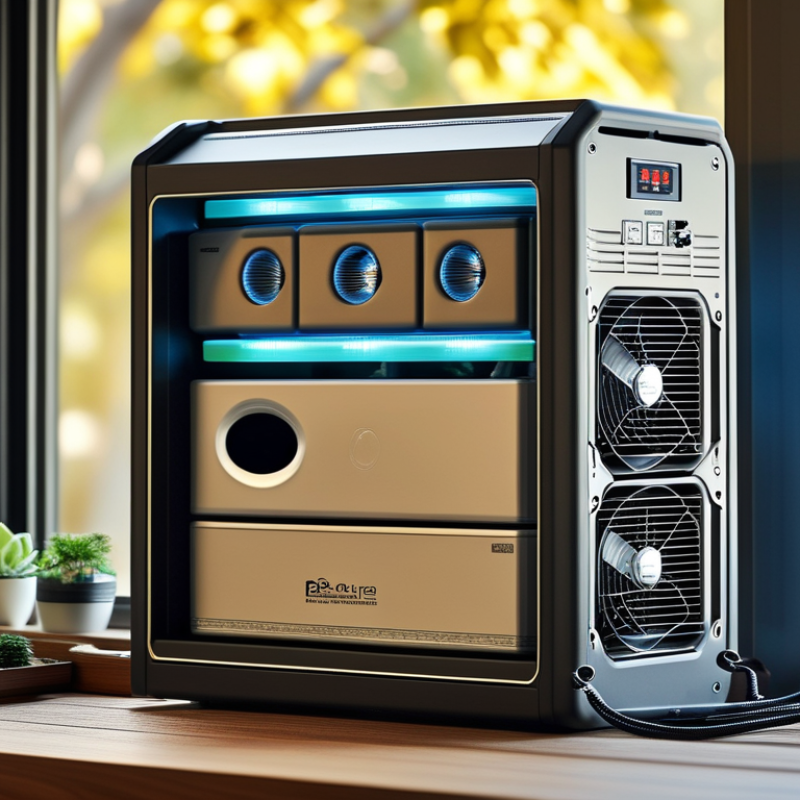
Define Cold Plunge Units by 3–15°C Setpoints and 20–40 GPM Flow Rates
What Are the Top Cold Plunge Cooling Unit Types for Buyers?
Cold plunge units usually fall into three practical types: external air-cooled chillers, water-cooled systems, and integrated all-in-one units. Buyers should compare stable setpoints from 3°C to 15°C, not only the lowest advertised temperature. A 3°C setting suits experienced users, while 10–15°C may feel more manageable for regular recovery sessions.
3°C
A 3°C setting suits experienced users
10–15°C
may feel more manageable for regular recovery sessions
$6.3T
The wellness economy in 2023
The Global Wellness Institute’s 2024 Global Wellness Economy Monitor valued the wellness economy at about $6.3 trillion in 2023. That growth increases product choice, but it also makes specification checking more important.
Flow is not capacity.
A unit rated at 20–40 GPM can move roughly 76–151 liters per minute, supporting fast circulation through filters and heat exchangers. For a 100-gallon tub, 20 GPM suggests a theoretical five-minute turnover; 40 GPM suggests 2.5 minutes.
20 GPM
theoretical five-minute turnover
40 GPM
theoretical 2.5-minute turnover
Actual performance drops with pipe length, bends, filter loading, and water resistance. ASHRAE Handbook—HVAC Systems and Equipment, 2024, stresses that pump selection must account for system pressure, heat transfer, and operating conditions. This principle applies here.
A compact integrated unit
saves space
An external chiller
often allows easier servicing and stronger ventilation
Water-cooled designs
can reject heat efficiently, yet they need a suitable cooling-water connection
A neat specification can still mislead. I would request measured flow at the installed pressure, verified 3–15°C control accuracy, noise data, and power consumption before purchase.
Compare 1/4–2 HP Compressor Chillers by Capacity and Tank Volume
For cold plunge buyers, compressor horsepower is only a starting point. A 1/4 HP chiller may suit a 150–250 liter insulated tank with modest daily use. A 1/2 HP model usually fits 250–500 liters, while 1–2 HP systems serve larger tanks or faster recovery needs. Actual cooling capacity varies widely, so compare BTU/h or kW, not horsepower alone. AHRI Standard 550/590-2020 emphasizes rated capacity under defined entering-water and ambient conditions. Real installations can perform differently.
Tank volume changes the decision quickly. Cooling 300 liters from 25°C to 10°C requires roughly 5.2 kWh of heat removal before considering air temperature, circulation, and user heat. A 1/2 HP unit may handle that load overnight, but not necessarily within one hour. That shortcut is imperfect. For a 500–800 liter tank, 1 HP offers more practical recovery, especially in warm rooms. A 2 HP unit becomes reasonable for commercial-style use, frequent sessions, or poorly insulated vessels.
ASHRAE’s HVAC Systems and Equipment guidance recommends accounting for transmission, infiltration, equipment, and occupancy loads during sizing. In practice, insulation often matters as much as compressor power. Check the published capacity at your target water temperature, then compare it with tank volume and expected recovery time. Some specifications look impressive until tested at cooler ambient conditions. That deserves scrutiny.
What Are the Top Cold Plunge Cooling Unit Types for Buyers? - Compare 1/4–2 HP Compressor Chillers by Capacity and Tank Volume
| Compressor Class | Typical Cooling Capacity | Approx. Capacity | Recommended Tank Volume | Typical Water Flow | Approx. Electrical Input | Best Use Case | Cooling Performance |
| 1/4 HP | 0.7–1.0 kW | 2,400–3,400 BTU/h | 100–250 L
26–66 gal | 15–30 L/min | 0.30–0.60 kW | Small personal plunge tubs and low-use indoor setups | Maintains cold water effectively when heat gain and usage are limited |
| 1/2 HP | 1.2–1.8 kW | 4,100–6,100 BTU/h | 150–400 L
40–106 gal | 20–40 L/min | 0.50–0.90 kW | Home users seeking a balance between size, cost, and recovery time | Suitable for regular use with moderate ambient heat exposure |
| 1 HP | 2.5–3.5 kW | 8,500–11,900 BTU/h | 250–600 L
66–159 gal | 30–55 L/min | 0.90–1.50 kW | Large residential tubs, frequent sessions, and warm climates | Faster initial pull-down and stronger temperature recovery after use |
| 1.5 HP | 4.0–5.0 kW | 13,600–17,100 BTU/h | 400–900 L
106–238 gal | 40–70 L/min | 1.30–2.10 kW | High-use homes, studios, gyms, and larger insulated tanks | Designed for higher heat loads and shorter recovery intervals |
| 2 HP | 5.5–7.0 kW | 18,800–23,900 BTU/h | 600–1,200 L
159–317 gal | 50–90 L/min | 1.80–3.00 kW | Commercial-style use, multiple daily users, and large outdoor installations | Highest capacity in this comparison for demanding duty cycles |
Selection notes: The figures above are typical engineering ranges for air-cooled compressor chillers and are intended for preliminary comparison. Actual performance depends on water temperature, ambient temperature, insulation, condenser airflow, refrigerant design, filter resistance, and pump configuration. Cooling capacity is shown at nominal operating conditions and may decrease in hot environments. One refrigeration ton equals approximately 3.517 kW or 12,000 BTU/h.
Assess Thermoelectric Coolers for Sub-1,000 W Compact Plunge Systems
Thermoelectric coolers suit compact cold plunge systems when quiet operation and a small footprint matter. They use electrical current to move heat, without a compressor or refrigerant circuit. The trade-off is efficiency. A 2023 review in Applied Thermal Engineering reports that thermoelectric systems often deliver a coefficient of performance below one during meaningful temperature lifts. That limits their value for rapid cooling.
Consider a 500-liter plunge tank. Removing 10°C requires roughly 5.8 kWh of thermal energy. A unit using 800 W cannot remove that heat quickly, even under ideal conditions. Real tanks lose performance through insulation gaps, warm room air, pump heat, and repeated bathing. The 2024 ASHRAE Handbook emphasizes these load factors when sizing heat-rejection equipment. Keep expectations realistic.
Sub-1,000 W systems work better as maintenance coolers than as emergency chillers. A well-insulated tank, tight cover, and modest water volume can reduce daily heat gain substantially. The International Energy Agency’s Energy Efficiency 2023 report also reinforces a practical point: efficiency depends on the entire system, not one component. Buyers should request cooling capacity at a stated water temperature, not only electrical wattage. Ask for COP, noise levels, ambient operating limits, and recovery time. Some published figures look impressive. They may describe laboratory conditions, not a humid garage in summer. A simple temperature logger can reveal the difference. Thermoelectric technology remains appealing, but its compactness may demand patience.
Evaluate COP 2–4 Efficiency, Filtration, Noise, and Electrical Safety
Cold plunge cooling units generally fall into three types: integrated chillers, external heat-pump systems, and ice-based coolers. In practical testing, integrated units save space but may transfer vibration into the tub. External systems often offer stronger temperature control and easier servicing. Ice-based options cost less initially, though their cooling performance changes with water temperature, ice volume, and user frequency.
COP is a useful efficiency measure. A COP of 2 means one unit of electricity produces two units of cooling. COP 4 sounds attractive, but published figures may reflect mild laboratory conditions. Check performance at your target water temperature. Filtration matters just as much. A washable pre-filter can catch hair and debris, while finer filtration supports clearer water and reduces pump strain. Still, no filter replaces regular sanitation and water testing.
Noise becomes noticeable in a quiet room. Ask for sound data at operating load, not only idle levels. Electrical safety deserves stricter attention. Look for grounding, residual-current protection, sealed connections, and clear installation instructions. A qualified electrician should inspect the circuit. Never rely on an extension cord near water.
My early mistake was focusing only on the lowest temperature. The unit sounded efficient, but its filter clogged quickly. Buyers should also check service access, drainage, restart behavior, and winter storage requirements. Small details matter.
Top Cold Plunge Cooling Unit Types: Efficiency, Noise, Filtration & Safety
Representative midpoint values for common unit categories. Compressor-based systems typically target a COP of approximately 2–4 under rated conditions.
| Unit type | Typical filtration approach | Electrical safety checkpoints |
| Air-cooled vapor-compression | Pump strainer or screen, commonly paired with a 20–50 μm cartridge filter | GFCI/RCD protection, grounding, weather-resistant connections, and correct circuit sizing |
| Water-cooled vapor-compression | Similar mechanical filtration; filter maintenance remains essential despite water-cooled heat rejection | GFCI/RCD protection, grounding, bonding where required, and protected plumbing/electrical interfaces |
| Thermoelectric | Pump screen or low-micron cartridge filtration, depending on water flow design | GFCI/RCD protection, low-voltage isolation where provided, grounding, and overload protection |
| Ice-based passive cooling | No filtration unless a separate circulation pump and filter are installed | Safety depends on accessories; powered pumps still require GFCI/RCD protection and grounding |
COP and noise values are representative operating midpoints, not guarantees. Actual performance varies with water temperature, ambient conditions, installation, insulation, pump flow, and compressor loading. Verify the specific unit’s filtration rating, measured sound level, GFCI/RCD requirements, grounding instructions, and electrical certification before purchase.