
The global demand for Freeze Dried Fruits Powder is growing with clean-label snacks, sports nutrition, and convenient beverage mixes. Grand View Research valued the global freeze-dried food market at approximately USD 2.95 billion in 2023. Its report also projects strong growth through 2030. However, market estimates vary between research firms. That difference deserves attention.
As drying-technology expert Dr. Arun S. Mujumdar has stated, “Drying is one of the oldest and most common unit operations in food processing.” His observation remains practical today. Freeze-drying can preserve fruit color, aroma, and structure, but only when suppliers control temperature, vacuum pressure, and moisture exposure. A bright strawberry powder is not automatically a high-quality ingredient.
This guide reviews the Top 10 Freeze Dried Fruits Powder Suppliers through a buyer’s lens. It considers fruit origin, processing capacity, particle size, microbial testing, pesticide controls, packaging, minimum order quantities, and traceability. Supplier certifications, such as HACCP, ISO 22000, BRCGS, and organic approval, also require verification. Certificates can expire.
Reports from Grand View Research, IMARC Group, and MarketsandMarkets show expanding interest in freeze-dried ingredients, yet their market boundaries differ. Therefore, readers should treat forecasts as directional rather than absolute. Real purchasing decisions need current specifications, batch records, certificates of analysis, and sample testing. This comparison may not identify one universal winner. Applications differ. A bakery, supplement brand, and beverage manufacturer may need completely different suppliers.
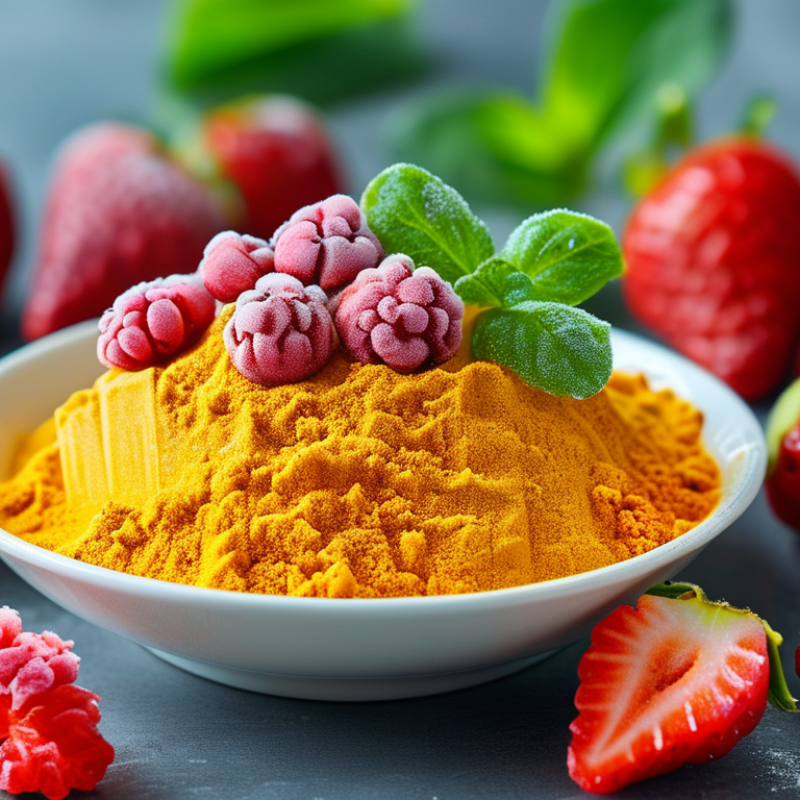
Freeze-dried fruit powders are made from ripe fruit with most moisture removed at low temperatures. The process helps preserve natural color, aroma, acidity, and some heat-sensitive nutrients. However, the powder is not identical to fresh fruit. Its flavor can taste sharper, and its texture may vary between batches.
Manufacturers usually inspect and wash the fruit before slicing or pureeing it. The prepared fruit is then frozen solid inside a vacuum chamber. Under reduced pressure, ice changes directly into vapor without becoming liquid. This step is called sublimation. The dry fruit is milled into a fine powder and passed through a sieve. Finally, it is packed in moisture-resistant containers, often with controlled oxygen exposure.
A reliable supplier should provide batch records, ingredient details, microbiological results, and a certificate of analysis. Traceability matters when fruit comes from different farms or harvest seasons. Good suppliers also monitor water activity, particle size, and storage conditions. Freeze-drying does not make poor fruit excellent, and it does not automatically remove contamination. That point is easy to overlook. I would also question unusually bright color or extremely low prices. Powder can absorb humidity quickly, forming hard lumps and losing its fresh aroma. For the top ten suppliers, buyers should compare process controls, testing transparency, packaging quality, and consistency across repeated samples.
Choosing among the top 10 freeze-dried fruit powder suppliers requires more than comparing prices. A reliable supplier should provide recent certificates of analysis, full batch traceability, and clear processing records. Ask for moisture and water activity results. Low water activity helps limit microbial growth and supports longer storage. The product should also retain a natural color, clean aroma, and consistent particle size.
The UNEP Food Waste Index Report 2024 estimated that 1.05 billion tonnes of food were wasted in 2022. Freeze-drying can help preserve seasonal fruit, but it does not correct poor sourcing or weak hygiene. Check whether the supplier uses HACCP-based controls, validated sanitation procedures, and independent microbial testing. ISO 22000 certification can support credibility, yet certification alone is not proof of excellent batches. Review at least three consecutive COAs. One attractive sample proves little.
Tips: Request a 500-gram production sample, not a laboratory sample. Test it in your own smoothie, yogurt, or bakery formula. Watch for clumping, excessive sweetness, dull color, or a cardboard-like aftertaste. Confirm origin, allergen controls, pesticide-screening scope, packaging material, and shelf-life data. I would also compare the declared fruit percentage with the ingredient list. Some powders look vibrant but contain added carriers. That detail is easy to miss.
Anonymous supplier-screening benchmark based on commonly published commercial specifications. All supplier-specific values should be verified through current technical data sheets, certificates, samples, and quotations before purchasing.
| Supplier Profile | Product Range | Typical Moisture Target | Particle Size Options | Minimum Order Quantity | Typical Lead Time | Food-Safety Documentation | Packaging Options | Customization | Screening Score |
|---|---|---|---|---|---|---|---|---|---|
| Anonymous Supplier 01 | Strawberry, blueberry, raspberry, mango and banana powders | Typically ≤5% | 60–80 mesh; custom mesh available | 25–50 kg for standard items | 3–5 weeks after order confirmation | COA and allergen statement commonly available | Multi-layer moisture-barrier bags; cartons or drums | Private label and formulation support subject to review | 91/100 |
| Anonymous Supplier 02 | Apple, peach, pear, cherry and mixed-fruit powders | Usually 3–6% | 40–100 mesh | 50 kg for regular products | 4–6 weeks | HACCP or equivalent controls commonly documented | Vacuum-sealed foil bags and fiber drums | Color, cut and blend specifications may be reviewed | 89/100 |
| Anonymous Supplier 03 | Organic berry, tropical-fruit and citrus powders | Typically ≤5% | 80 mesh standard; other sizes by quotation | 25 kg for selected stock items | 3–6 weeks | Organic, microbiological and pesticide documentation may be available | Aluminum-laminate pouches; optional outer cartons | Organic and clean-label programs supported | 94/100 |
| Anonymous Supplier 04 | Banana, pineapple, papaya and passion-fruit powders | Usually 4–7% | 30–80 mesh | 50–100 kg | 4–8 weeks during peak season | COA generally available; verify audit status | PE-lined bags, cartons and drums | Blend ratios and pack sizes may be customized | 85/100 |
| Anonymous Supplier 05 | Single-fruit powders for beverages, bakery and supplements | Typically ≤5% | 40, 60 and 80 mesh | 25 kg sample order; 100 kg commercial order | 2–4 weeks for stock products | Batch COA, microbiology and heavy-metal testing commonly offered | Vacuum packs with desiccant; bulk drums | Good support for pilot batches and product trials | 92/100 |
| Anonymous Supplier 06 | Vegetable-fruit blends and functional smoothie powders | Usually 4–6% | 60–100 mesh | 50 kg | 5–8 weeks | Confirm current third-party certification | Foil-lined bags and lined fiber drums | Blend development and nutrition-panel support may be available | 83/100 |
| Anonymous Supplier 07 | Citrus, berry and exotic-fruit powders for food applications | Typically ≤5% | 40–80 mesh | 25–50 kg | 3–5 weeks | Traceability records and allergen declarations commonly provided | Light- and oxygen-barrier bags | Flavor, color and packaging requirements can be evaluated | 90/100 |
| Anonymous Supplier 08 | Fruit powders for confectionery, dairy and nutritional products | Usually 3–6% | 60 mesh standard; custom sizes possible | 100 kg for customized products | 5–8 weeks | Food-grade manufacturing records commonly available | Bulk bags, lined cartons and drums | Industrial-scale formulation support | 87/100 |
| Anonymous Supplier 09 | Premium berry and tropical-fruit powders with color retention focus | Typically ≤4% | 80–120 mesh | 25 kg for selected products | 3–6 weeks | Detailed COA and shelf-life information may be available | High-barrier foil bags with nitrogen flushing by request | Strong support for premium and clean-label products | 93/100 |
| Anonymous Supplier 10 | Mixed fruit powders for beverage, bakery and retail applications | Usually 4–7% | 30–80 mesh | 50–100 kg | 4–7 weeks | Request current audit, allergen and pesticide records | Standard moisture-barrier bags and cartons | Private-label packaging subject to minimum volumes | 84/100 |
Top 10 Freeze-Dried Fruit Powder Suppliers?
The top ten freeze-dried fruit powder suppliers should be judged by product range and quality, not advertising alone. Strong suppliers offer powders made from berries, tropical fruits, citrus, apples, and specialty produce. A broad range helps manufacturers develop drinks, bakery fillings, nutrition blends, and natural color systems. Quality begins with ripe fruit, controlled freezing, and careful low-temperature drying. The powder should keep a fresh aroma, clear color, and clean fruit taste.
Reliable suppliers provide batch records, ingredient specifications, allergen statements, and laboratory test results. Look for moisture, microbiological, pesticide, and heavy-metal testing. Traceability should connect each batch to its growing region and processing date. Suppliers with food-safety certifications and stable packaging practices deserve closer attention. Foil-lined bags, oxygen control, and cool storage can protect delicate flavors. Product consistency matters too. One sample may look excellent, but repeated batches reveal the truth.
Tips: Request samples from several suppliers and compare them in the same recipe. Check how the powder disperses in cold water. Ask about carrier ingredients, particle size, minimum order quantities, and shelf life. A supplier may offer many fruits but lack dependable seasonal supply. That is worth questioning. I would also test color after heating, because attractive raw powder can fade during processing. Small details matter. Initial pricing can mislead; waste, weak flavor, and inconsistent texture may cost more later.
Anonymized comparison by product range, quality controls, and certification coverage
The chart uses a 0–100 evaluation scale. Product range reflects fruit variety and format coverage, quality control reflects testing and traceability practices, and certification coverage reflects commonly requested food-safety and quality certifications. Supplier labels are anonymized for comparison.
Choosing among freeze dried fruit powder suppliers requires more than comparing catalog photos. Certifications should match your market and product use. Look for current HACCP, ISO 22000, or equivalent food safety systems. Organic claims need valid certificates, not simple website statements. Request a recent certificate of analysis for moisture, microbiological results, pesticide screening, and heavy metals. Lot codes and traceability records show whether a supplier can investigate problems quickly.
Tips: Compare prices by usable kilogram, not quoted kilogram. Check fruit percentage, carrier ingredients, testing fees, packaging, shipping, and minimum order quantities. A cheaper powder may contain more carrier and deliver weaker color or flavor. Ask for samples from different production lots. One sample can look excellent by chance. I once focused too heavily on price and underestimated the cost of inconsistent aroma.
Custom service also deserves practical questions. Can the supplier adjust mesh size, sweetness, color intensity, or blend ratios? Can they provide moisture-resistant bags, retail-ready labels, or small trial batches? Confirm lead times in writing, including approval delays and seasonal shortages. A reliable technical contact should explain processing limits without making vague promises. Ask how changes are documented, because verbal agreements are easy to misremember. Suppliers with clear specifications, transparent testing, and responsive communication usually create fewer surprises during scale-up.
Choosing a freeze-dried fruit powder supplier requires more than comparing prices. Start with the fruit’s origin, processing date, and traceability records. A reliable supplier should provide a clear certificate of analysis for each batch. Check moisture, microbiological results, particle size, and declared allergens. These details matter when the powder enters beverages, bakery mixes, or nutritional products.
Ask how the supplier controls temperature, oxygen, and packaging during production. Good freeze-dried powder should retain a fresh color, recognizable aroma, and clean fruit flavor. Request a small sample before placing a large order. Test it in your actual recipe, not only in a glass of water. Solubility can change with sugar, fat, acidity, and heat. Small differences matter.
Review minimum order quantities, lead times, storage guidance, and shipment conditions. Packaging should protect the powder from humidity, light, and repeated opening. A supplier with documented quality procedures is usually easier to audit and communicate with. Still, certificates are not the whole story. I once underestimated how quickly a fine powder absorbed moisture during production trials. That mistake changed my storage requirements. Ask difficult questions early, and record every answer. A supplier may look capable on paper, yet slow responses can create expensive delays. Choose evidence over impressive claims.