7 Tips for Buying Bulk Bamboo Toilet Paper
Buying toilet paper by the pallet can reduce repeat deliveries, but it can also magnify a poor decision. Bulk Bamboo Toilet Paper deserves careful evaluation, not just a green-looking package.
The Food and Agriculture Organization’s Global Forest Resources Assessment 2020 reports that forests cover about 31% of the world’s land area. This makes fiber sourcing important, even for everyday bathroom products. INBAR research also describes bamboo as a rapidly renewable resource, but responsible management still matters. Bamboo is not automatically sustainable. Farming methods, land conversion, bleaching, transport, and packaging can change its environmental performance.
A reliable purchase begins with evidence. Request fiber origin, manufacturing details, product testing, and current certification documents. FSC chain-of-custody certification can help verify controlled material flows. ISO 14024 principles also offer useful guidance when comparing environmental claims. Do not rely on vague words such as “natural” or “eco-friendly.”
Small details matter. Check sheet dimensions, ply count, roll length, core size, carton weight, and minimum order quantity. A cheaper case may contain shorter rolls or thinner sheets. Ask for samples before ordering hundreds of cartons. Test softness, strength, dust, and dispenser compatibility in a real restroom.
No product is impact-free.
I would also question unusually impressive claims. Suppliers should explain them clearly, with documents rather than slogans. The tips ahead focus on practical purchasing, verified sustainability, storage conditions, total delivered cost, and supplier reliability. Some recommendations may seem obvious, yet bulk errors are expensive. A warehouse filled with unusable rolls is not a saving.
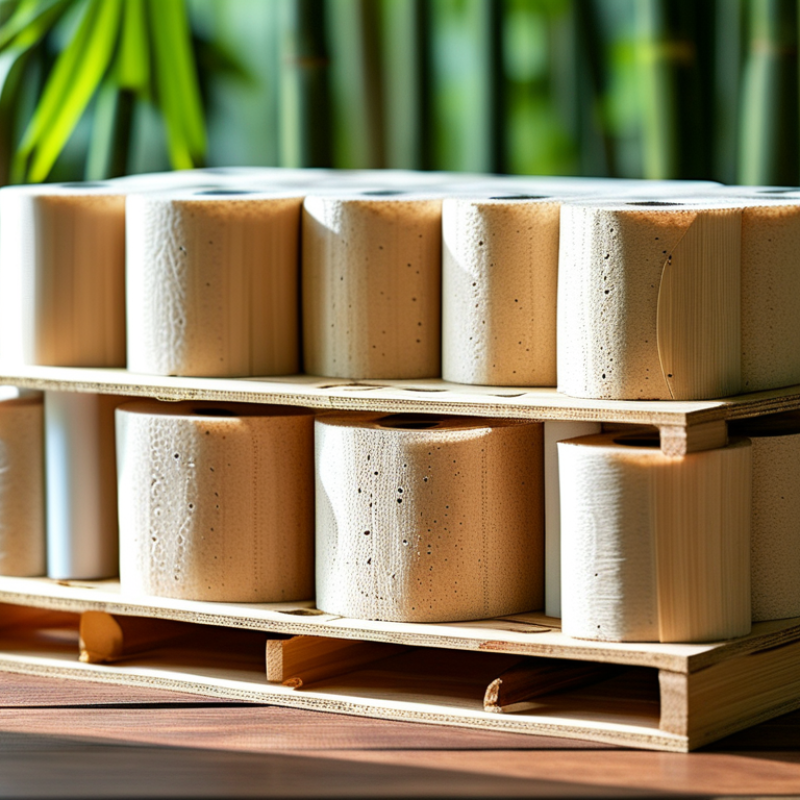
Determine Your Household or Business Toilet Paper Requirements
Buying bulk bamboo toilet paper starts with an accurate usage estimate, not a large storage room. Count the people using each bathroom daily. Then record how many rolls disappear during a typical week. Include guests, cleaners, customers, and seasonal changes. A family of four may use far less than a busy office with twenty employees.
For a household, track consumption for two or three weeks. Divide the total rolls by the number of people and days. Multiply that daily figure by your planned buying period. Add a modest reserve for visitors or delivery delays. Keep the reserve practical. Excess stock can absorb moisture, odors, or storage space. Store packs on a raised, dry shelf, away from plumbing leaks.
Businesses need a more detailed calculation. Count staff members, operating hours, restroom locations, and customer traffic. A café may need more paper on weekends, while a small studio may use less. Check sheet count and ply, not only roll quantity. My own early estimates were too low because I ignored cleaning staff and weekend visitors. That mistake taught me to review invoices monthly. Leave room to adjust. Usage is rarely perfectly stable.
Assess Bamboo Fiber Quality, Ply, Strength, and Softness
When buying bulk bamboo toilet paper, inspect the fiber source before comparing carton prices. Bamboo pulp should feel clean, even, and free from rough chips. Ask whether the product uses bamboo pulp, recycled blends, or added conventional fibers. The label can be vague. That matters. Fiber quality affects softness, lint, absorbency, and sheet stability during use. A sample roll reveals more than a product photograph. Rub one sheet between dry fingers, then test it with a few drops of water. If it pills quickly or tears in your hand, bulk savings may become waste.
Ply deserves closer attention than a large “soft” claim. Two-ply often balances comfort and cost, while three-ply may feel stronger but use more material. Check whether the layers separate evenly along the perforation. Uneven bonding can cause splitting. Strength should be tested wet, not only dry. Hold a damp sheet by two corners and pull gently. It should resist immediate breakage without feeling stiff. Still, one home test cannot replace documented specifications. Request basis weight, sheet dimensions, tensile information, and moisture data when available.
Softness depends on fiber length, refining, embossing, and finishing. Press the roll lightly against your wrist; harsh drag may suggest coarse fibers or aggressive embossing. A neutral smell is preferable. Strong fragrance can distract from fiber quality. Compare samples from different production lots because bulk consistency is easy to underestimate. Ask for traceability records and independent laboratory reports, but read them carefully. Test methods differ, and a promising number may not reflect daily bathroom use. My own evaluation would remain cautious here. A small sample cannot predict every shipment.
Compare Roll Dimensions, Packaging Formats, and Bulk Quantities
Measure sheet width, sheet length, roll diameter, and core diameter before comparing prices. Size matters. A wider sheet may reduce usage, while a shorter roll can distort the unit cost. Compare total sheets and estimated square footage per case, not roll counts alone. Check ply, perforation spacing, and wet strength for practical performance.
Packaging can change both waste and storage needs. Choose individually wrapped rolls for hygiene-sensitive areas, but consider larger case packs for warehouses. Cartons with fewer inner bags usually create less material. The U.S. EPA reported 67.4 million tons of paper and paperboard waste in 2018, representing 23.1% of municipal solid waste. Packaging choices deserve attention. The AF&PA 2023 Paper Recycling Monitor reported a 60.8% U.S. paper recovery rate, supporting recyclable carton designs.
Calculate bulk quantities from real consumption. Record weekly roll use for four weeks, then add a modest reserve. Do the math. A case with 80 short rolls may last less than a case with 48 longer rolls. Confirm pallet dimensions, case weight, and minimum order quantities before purchasing. Keep it dry. Bamboo tissue can lose strength when stored near leaks or high humidity. ISO 12625 tissue standards provide useful testing references for tensile strength, thickness, and softness, although supplier results may not perfectly reflect daily use. I would also request a sample case. Product labels are sometimes incomplete, and my first comparison would not rely on roll count alone.
Evaluate Supplier Pricing, Certifications, Delivery, and Reliability
Buying bulk bamboo toilet paper requires more than comparing carton prices. A 2024 tissue-market analysis from Smithers identifies sustainability as a continuing purchasing factor, but “eco-friendly” claims vary widely. Request a quote per roll, per 100 sheets, and per delivered carton. Include core size, ply, sheet dimensions, packaging, duties, and freight. A cheaper invoice can become expensive after port handling and storage.
Ask suppliers for current FSC or equivalent chain-of-custody documentation, not just a logo image. Match the certificate scope to the actual bamboo material and converting site. Also request fiber-origin records, recycled-content statements, and recent laboratory tests for strength, softness, and disintegration. ISO 9001 certification can indicate documented quality controls, although it does not prove environmental performance. Small detail, big difference.
Delivery reliability needs measurable evidence. The World Bank’s 2023 Logistics Performance Index evaluates customs, infrastructure, shipment arrangement, tracking, logistics competence, and timeliness. Ask for the supplier’s average lead time, on-time shipment rate, minimum order quantity, and backup-port plan. Require production samples before committing to a full container. In my experience, forecasts often look perfect until peak season arrives. A written tolerance for damaged cartons and delayed shipments is worth more than a friendly promise.
Check Sustainability Claims, Storage Needs, and Return Policies
Buying bulk bamboo toilet paper requires more than comparing roll counts. I once treated “eco-friendly” wording as proof. That shortcut was careless. The FAO’s Global Forest Resources Assessment 2020 reports that 420 million hectares of forest disappeared since 1990. Ask whether the bamboo is traceable, rapidly renewable, and processed with documented water and energy controls. Look for independent certification, a clear fiber source, and lifecycle evidence. Vague claims like “green” or “natural” reveal little. The U.S. Federal Trade Commission also advises companies to qualify environmental claims clearly, rather than implying universal benefits.
Storage can quietly erase bulk-buy savings. Keep cartons on raised shelving, not directly on a concrete floor. Choose a cool, dry room away from plumbing, sunlight, and strong odors. A damp garage may turn pristine rolls into warped, dusty stock. Measure the space before ordering. Leave walking clearance around cartons, especially in narrow utility rooms. I underestimated this once and blocked a cupboard door for weeks. Smaller deliveries may create more packaging, but they can reduce moisture damage and household clutter.
Read the return policy before checkout. Confirm the claim period, return shipping responsibility, damage procedure, and whether opened hygiene products qualify. Photograph crushed cartons immediately. The 2023 NRF and Appriss Retail report estimated $743 billion in U.S. merchandise returns, representing 14.5% of annual retail sales. That figure shows why policies vary sharply. A low price becomes less attractive when damaged goods cannot be replaced. Check delivery timing too, because a large shipment needs a safe, dry arrival location.
7 Tips for Buying Bulk Bamboo Toilet Paper
This practical scoring model ranks each buying check from 1 to 5 according to its impact on a bulk purchase decision. Sustainability evidence, product specifications, storage planning, and return policies should be reviewed before placing a large order.