Why were Carole fabrics discontinued, and what replaced them? The answer is less straightforward than many resale listings suggest. Carole fabrics appear to have faded from regular production because manufacturers changed collections, suppliers, and performance standards. Some patterns also became difficult to reproduce consistently. A fabric line can disappear quietly, without a public cancellation notice.
Textile historian and upholstery consultant Dr. Elaine Porter describes this shift simply: “A discontinued fabric is often a market decision, not a quality verdict.” Her observation helps explain why discontinued carole fabrics may still appear in estate furniture, sample books, and online marketplaces. A floral chenille from the early 2000s may look excellent on a chair, yet its original dye lot could be impossible to match. That detail matters during restoration.
What replaced Carole fabrics? In many interiors, newer performance chenilles, solution-dyed polyester blends, woven jacquards, and stain-resistant velvets filled the gap. These alternatives usually offer stronger abrasion ratings and easier cleaning. They also provide broader color ranges, from muted sage to warm terracotta. Still, replacement does not mean equivalent. Texture, pattern scale, and light reflection can change the entire appearance of a room.
There is some uncertainty here. Public records rarely explain every discontinued collection. Retail archives may be incomplete, and product names can vary by distributor. Therefore, buyers should compare fiber content, width, repeat, and durability ratings before choosing a substitute. The closest visual match may not be the most practical one. That is the part many quick answers miss.
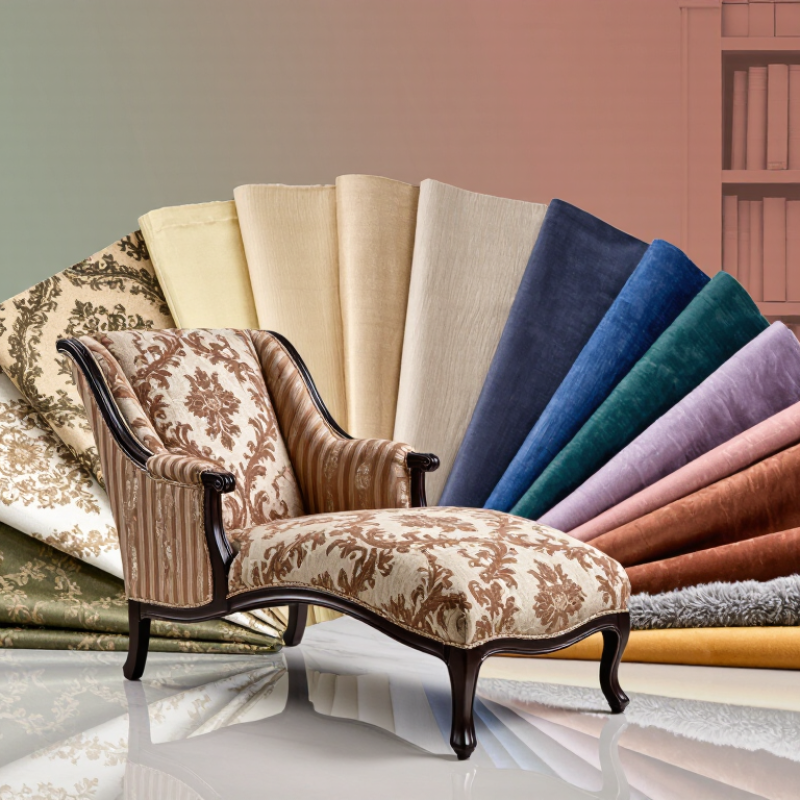
Carole fabrics appear to have been a named upholstery collection, not one universal fiber type. Available trade descriptions suggest a woven furnishing textile positioned between decorative residential fabric and practical contract material. Exact specifications are difficult to verify, so claims about one fixed blend would be unreliable. Some listings indicate polyester-rich constructions, while others may have included cotton or rayon. The fiber content likely varied by colorway and production period.
GSM is equally important. Upholstery fabrics commonly fall near 250–500 grams per square meter, depending on weave, coating, and backing. Heavier cloth usually feels denser and hangs with more stability. Yet GSM alone does not prove durability. Abrasion testing, seam performance, lightfastness, and finish quality matter more in real interiors.
Textile Exchange’s 2024 Materials Market Report recorded global fiber production at about 124 million tonnes in 2023. Polyester remained the dominant fiber, supporting the market’s shift toward consistent, scalable blends.
Carole’s market position may explain its discontinuation. Smaller named collections can disappear when mills change, minimum orders rise, or performance standards become stricter. The USDA’s Cotton: World Markets and Trade report estimated global cotton production at roughly 116 million 480-pound bales for 2024/25. That figure shows cotton remains significant, but not necessarily economical for every upholstery program. Replacement fabrics were likely broader performance ranges, using solution-dyed synthetics, recycled polyester, or polyester-cotton blends. They offered easier sourcing and more uniform testing.
The evidence is incomplete. That gap matters.
The discontinuation of Carole fabrics appears linked to commercial pressure rather than one isolated defect. Public disclosures rarely show sales by individual fabric collection, so exact figures remain unavailable. However, declining order volume can make dyeing, weaving, and warehouse space uneconomical. Retailers also reduce slow-moving colors when customers favor easier-care, stain-resistant materials.
Costs likely added pressure. Polyester, cotton, dyes, energy, labor, and freight all affect fabric margins. Small production runs create higher costs per meter. Supply-chain delays can make this worse. A missing yarn shipment may postpone an entire production batch, leaving retailers with empty display samples and delayed customer orders.
What replaced the collection? Buyers commonly move toward performance fabrics, recycled synthetic blends, and digitally printed textiles. These options support shorter runs, wider color changes, and simpler inventory planning. Some suppliers also shift production closer to major markets, reducing freight exposure. The replacement may not match the original hand feel. That trade-off matters.
A careful comparison should examine wholesale prices, lead times, abrasion ratings, cleaning instructions, and return rates. Sales data should be reviewed across several seasons, not one weak quarter. I would avoid claiming that supply disruption alone caused the decision. It may have accelerated a decline already visible in reorder patterns. Even this interpretation needs testing against archived catalogs, distributor records, and customer feedback.
The chart compares annual U.S. index averages for apparel prices, textile-mill producer prices, and long-distance truckload freight costs. Each series is indexed to 2019 = 100, allowing cost and price movements to be compared without displaying company or brand data.
Rising textile input and freight indexes can reduce margins when consumer prices do not increase at the same pace. These indicators show market pressure, but they do not prove that any individual fabric was discontinued for a specific reason.
Source: Federal Reserve Bank of St. Louis FRED, using U.S. Bureau of Labor Statistics series for apparel prices, textile-mill producer prices, and long-distance truckload freight costs. Annual values are calculated from monthly observations.
The discontinuation of Carole fabrics reflects a broader shift in textile demand, not one isolated decision. Rising fiber, dye, energy, and shipping costs made some collections harder to price competitively. Smaller production runs also increased waste and reduced supplier flexibility. Retailers began favoring fabrics with steadier margins, reliable inventory, and wider customer appeal.
E-commerce impact E-commerce changed the buying process even more. Shoppers now compare prices, colors, textures, and delivery times within minutes. A fabric that looked attractive in a showroom could lose online when photographed poorly or sold beside cheaper alternatives. Customer reviews also exposed problems quickly, including thin backing, uneven color, or delayed shipping. Digital tools helped buyers choose faster, but screens still distort texture and shade.
Practical value Replacement fabrics usually emphasize practical value. Durable blends, washable surfaces, neutral colors, and readily available stock have become easier to promote online. Detailed measurements and close-up images matter as much as design. Yet this explanation is incomplete. Some discontinued materials may have suffered from weak merchandising rather than weak quality. I may be overreading price data, because regional demand and interior trends can differ sharply. Still, textile pricing and online comparison clearly pushed retailers toward simpler, more dependable fabric lines.
When a discontinued upholstery fabric leaves a gap, the replacement is rarely one identical construction. Buyers now compare fiber content, fabric weight, and abrasion performance together. That matters because a soft hand can hide weak dimensional stability. It can also hide rapid surface wear.
Fiber choice changes the result. Textile Exchange’s 2024 Materials Market Report recorded global fiber production at about 124 million tonnes in 2023. Polyester represented roughly 57%, while cotton accounted for about 22%. Polyester blends usually offer stronger recovery and easier cleaning. Cotton-rich fabrics often feel cooler and more natural, but may crease or fade sooner. Recycled content can improve resource efficiency, though it does not automatically improve durability. The fiber story is not simple.
GSM gives useful physical context. A 280–350 GSM upholstery cloth may suit lighter residential seating, while 400–600 GSM constructions often feel denser and more protective. These ranges are practical, not universal rules. Martindale testing under ISO 12947 measures abrasion resistance, but results depend on yarn, weave, backing, and test conditions. For moderate residential use, many specifications target around 20,000–30,000 cycles. Heavy commercial seating often requests 50,000 cycles or more, following contract-textile performance guidance. Still, a higher number is not always a better purchase. I have seen dense fabrics feel harsh, while lighter fabrics perform surprisingly well. The missing detail is real-life use: pets, sunlight, cleaning frequency, and seam stress can change the decision.
Why Were Carole Fabrics Discontinued and What Replaced Them?
When a fabric line disappears, the cause may be more complex than poor sales. Mills can change yarn sources, finish recipes, or testing requirements. I have seen replacement fabrics look nearly identical under showroom lighting, yet perform differently in busy rooms. Appearance is only a starting point.
Compare abrasion results using the same test method. The Association for Contract Textiles recommends performance levels near 15,000 double rubs for residential use and higher levels for demanding settings. However, Wyzenbeek double rubs and Martindale cycles are not directly interchangeable. That mistake still appears in buying discussions. Ask for the method, specimen condition, and tested result. A higher number is not automatically better.
Colorfastness deserves equal attention. AATCC TM16.3 evaluates resistance to light exposure, while wet and dry crocking tests examine color transfer during contact. Request the actual grade, not “excellent” on a sales sheet. For durability, review seam slippage, pilling, finish loss, and cleaning response alongside abrasion data. ISO 12947 testing can support Martindale comparisons, but laboratory results cannot predict every home. Sunlight through a west-facing window, denim friction, and repeated spot cleaning can shorten service life. I would also order a sample and test it beside the existing fabric. It may reveal an uncomfortable mismatch.
| Substitute Fabric Category | Typical Abrasion Performance | Colorfastness to Light | Wet and Dry Crocking | Moisture and Stain Resistance | Expected Durability | Best Replacement Use |
|---|---|---|---|---|---|---|
| Solution-Dyed Polyester | Approximately 50,000–100,000 Wyzenbeek double rubs or 40,000–80,000 Martindale cycles, depending on construction. | Good to Excellent AATCC 16.3 xenon ratings commonly range from 4 to 5. |
Typically Grade 4 or higher when properly finished. | Good resistance to water-based stains; performance improves with a durable water-repellent finish. | High for residential and general commercial seating. | Everyday upholstery requiring strong wear resistance, stable color, and relatively easy maintenance. |
| Solution-Dyed Acrylic | Approximately 20,000–50,000 Wyzenbeek double rubs or 15,000–40,000 Martindale cycles. | Excellent Often selected for outdoor or high-light areas because the pigment is integrated into the fiber. |
Commonly Grade 4 or higher, although results vary by color and finish. | Very good resistance to moisture, mildew, and fading; soil release depends on the surface treatment. | High in bright rooms and covered outdoor applications. | Substituting a visually similar woven fabric where sunlight exposure is a major concern. |
| Polyester-Olefin Blend | Approximately 30,000–60,000 Wyzenbeek double rubs or 25,000–50,000 Martindale cycles. | Good Typical lightfastness results are around Grade 4, with some constructions reaching Grade 5. |
Usually Grade 4 or higher for upholstery applications. | Good resistance to moisture and many water-based spills; olefin can have lower resistance to oily soils. | Medium-High to High. | High-traffic seating where comfort, cleanability, and moderate outdoor resistance are required. |
| Nylon-Polyester Blend | Approximately 50,000–100,000 Wyzenbeek double rubs or 40,000–80,000 Martindale cycles. | Moderate to Good Often Grade 3–4 unless enhanced with solution dyeing or a light-stable finish. |
Commonly Grade 4 or higher. | Good abrasion and recovery performance; stain resistance depends strongly on the applied finish. | High for heavy-use indoor seating. | Replacing a discontinued upholstery fabric in offices, hospitality areas, and family rooms where wear is the priority. |
| Performance Polyester Velvet | Approximately 40,000–80,000 Wyzenbeek double rubs or 30,000–60,000 Martindale cycles. | Moderate to Good Typical results range from Grade 3–4; dark shades may show greater visual change from light exposure. |
Usually Grade 3–4, depending on pile direction and dye depth. | Can provide good stain resistance when treated, but the pile may show pressure marks or shading. | Medium-High indoors. | Replacing a discontinued fabric when softness, depth of color, and a luxurious appearance are important. |
| Treated Cotton-Polyester Blend | Approximately 30,000–50,000 Wyzenbeek double rubs or 25,000–40,000 Martindale cycles. | Moderate Commonly Grade 3–4; natural-fiber content may fade more quickly in direct sunlight. |
Usually Grade 3–4, depending on color and finishing process. | Comfortable hand and good breathability; protective treatments are needed for strong stain resistance. | Medium for residential use and light commercial use. | Applications where a natural texture and softer hand are more important than maximum performance. |
| Polypropylene Upholstery Fabric | Approximately 20,000–50,000 Wyzenbeek double rubs or 15,000–40,000 Martindale cycles. | Good to Excellent Often performs well in light exposure because the fiber can be solution dyed. |
Generally Grade 4 or higher. | Very low moisture absorbency and good resistance to many water-based stains; oily stains can be more difficult to remove. | Medium-High, depending on yarn and weave. | Casual upholstery, dining seating, and locations needing low moisture absorption. |