
Blog

2026 Best Polyester Sleepwear for Global Buyers?

Choosing the best Polyetser Sleep Wear in 2026 requires more than comparing fabric prices. Global buyers must examine comfort, durability, factory control, documentation, and regional demand. A soft showroom sample can still fail after repeated washing.

Textile sustainability researcher Dr. Mark Sumner offers a practical reminder: “For sleepwear, comfort is a performance requirement, not a decorative feature.” This principle matters when evaluating polyester satin, microfiber, fleece, and recycled polyester. Each option feels different against the skin. Some fabrics dry quickly, while others trap warmth. Climate changes the decision.

This guide explores the strongest Polyetser Sleep Wear choices for international purchasing teams. It considers fabric weight, breathability, stretch recovery, colorfastness, seam construction, and size consistency. Buyers should also review recycled-content claims, test reports, labeling accuracy, and supplier traceability. Certification names alone do not guarantee product quality.

Small details matter.

A loose thread near the cuff may reveal weak finishing control. Excessive shine may reduce perceived comfort. Poor elastic recovery can damage customer confidence after several washes. These issues are easy to miss during a short inspection.

The ranking will not treat one polyester type as universally superior. That would be too simple. Supplier communication, target climate, retail position, and budget all influence the final choice. Some recommendations may need further testing before large orders. Practical sampling remains essential for dependable global sourcing.
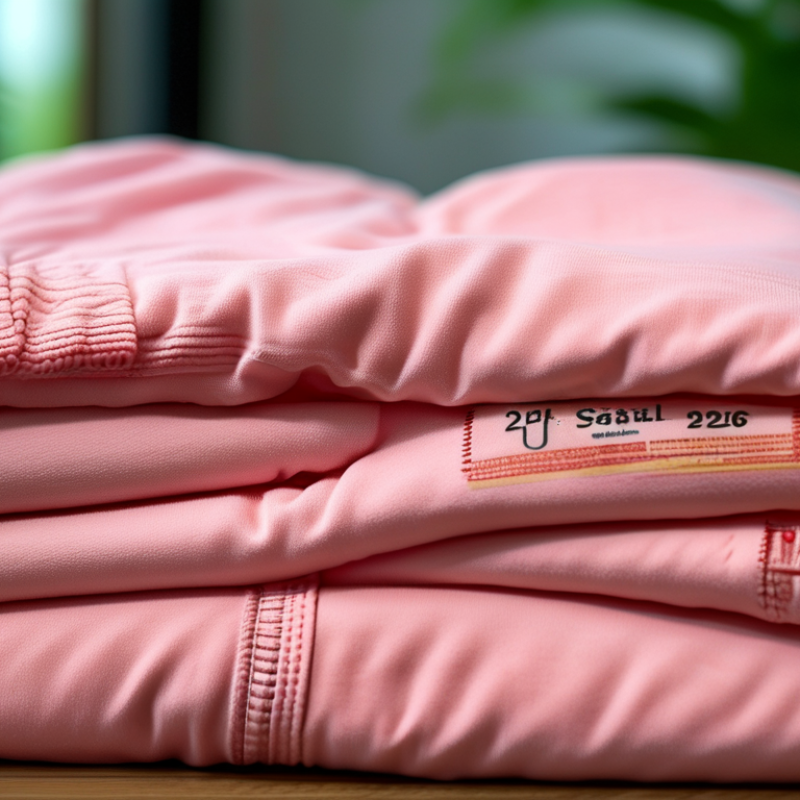
2026 Best Polyester Sleepwear for Global Buyers?

Polyester Sleepwear Fundamentals: Fiber Types, GSM, and 0.4% Moisture Regain

Polyester sleepwear begins with fiber selection, not color or styling. Most products use PET polyester, available as filament, spun yarn, or fine microfiber. Filament yarns create a smoother surface and cleaner drape. Spun polyester feels slightly more cotton-like. Recycled polyester can reduce dependence on virgin feedstock, but it does not automatically improve comfort.

Textile Exchange reported about 124 million tonnes of global fiber production in 2023. Polyester represented roughly 57% of that volume. This scale explains its strong supply availability for global buyers. However, large production volume is not proof of better sleep performance. I still check yarn count, finishing, seam construction, and test samples.

GSM affects warmth, opacity, and packing weight. Lightweight sleepwear often sits near 90–140 GSM, while 160–220 GSM fabrics feel warmer and more substantial. These ranges are practical references, not fixed rules. A brushed 140 GSM fabric may feel warmer than a smooth 180 GSM fabric. Polyester’s moisture regain is commonly listed near 0.4% in textile engineering data, compared with much higher values for cellulosic fibers. This means polyester absorbs little water vapor. It dries quickly, but may feel clammy during heavy sweating. Testing under AATCC or ISO conditioning methods improves comparison. Still, one laboratory result cannot represent every climate, body type, or washing routine.

2026 Market Signals: Polyester’s 57% Share of Global Fiber Production

2026 Best Polyester Sleepwear for Global Buyers?

Polyester’s estimated 57% share of global fiber production signals powerful supply capacity. Textile Exchange’s Materials Market reports show polyester remains the dominant manufactured fiber worldwide. Production scale can support stable pricing, consistent colors, and shorter replenishment cycles. Yet volume does not equal comfort. That distinction matters.

For sleepwear buyers, fabric construction deserves closer attention. A lightweight 120–180 gsm knit may feel cooler in warm climates. Brushed polyester can provide softness, but it may retain more heat. Moisture-wicking finishes can improve nighttime comfort, although performance often decreases after repeated washing. Testing should include pilling under ISO 12945 methods and colorfastness after laundering. Ask suppliers for test reports, fiber composition, fabric weight, and shrinkage results. Small details matter.

The recycled polyester market is growing, but Textile Exchange reports that recycled input remains a minority of total polyester production. Buyers should verify recycled content through credible chain-of-custody documentation. Certificates alone need careful review. Some claims still feel vague. Global purchasing teams should compare drying speed, static buildup, seam strength, and packaging conditions across samples. A fabric performing well in a showroom may feel uncomfortable after eight hours of sleep. That is easy to miss. Regional climate, washing habits, and consumer sensitivity should influence the final specification more than polyester’s impressive market share.

2026 Best Polyester Sleepwear for Global Buyers? - 2026 Market Signals: Polyester’s 57% Share of Global Fiber Production
Data-led material and product guide for international sleepwear sourcing, with no company or brand information included.
Data Dimension Verified Data or Commercial Range What It Means for Polyester Sleepwear Global Buyer Relevance Reference / Basis
Global fiber production share 57% of global fiber production was polyester in 2023. Polyester remains the largest fiber category globally, supporting broad availability of yarns, fabrics, trims, and manufacturing capacity. High supply availability Textile Exchange, Materials Market Report 2024
Global fiber production volume Approximately 124 million tonnes of fiber were produced globally in 2023. The scale of polyester production allows buyers to source multiple fabric weights, constructions, finishes, and price levels. Scalable sourcing Textile Exchange, Materials Market Report 2024
Typical sleepwear fabric weight Approximately 120–180 g/m² for lightweight jersey and interlock sleepwear; heavier options may exceed 180 g/m². Lower fabric weights generally suit warm climates and summer collections, while heavier constructions provide greater coverage and warmth. Climate-based selection Common commercial apparel specification range
Moisture regain Approximately 0.4% for standard polyester under standard test conditions. Polyester absorbs little moisture, so fabric engineering, yarn structure, and finishing are important for reducing a clammy feeling during sleep. Finish matters Standard textile-fiber property references
Drying performance Low moisture absorption generally supports faster drying than many absorbent cellulosic fibers. Useful for frequent washing, travel sleepwear, humid climates, and products marketed for easy-care performance. Easy care Fiber moisture-property comparison
Fiber density Approximately 1.38 g/cm³ for polyester. Fabric weight and hand feel depend on yarn count, knit or weave construction, and finishing rather than fiber density alone. Specification control Standard textile-fiber property references
Thermal behavior Polyester typically melts at approximately 250–260°C; exact values vary by polymer type and formulation. Care labels should control ironing temperature and avoid direct high heat. Product testing should confirm dimensional stability and seam performance. Care-label priority Standard polyester material-property references
Recommended construction for warm climates Lightweight moisture-management jersey, mesh panels, or engineered knit structures in the 120–160 g/m² range. Open structures and lower basis weight can improve air movement, but appearance, opacity, pilling, and snag resistance must be tested. Hot-weather option Product-development specification range
Recommended construction for cool climates Interlock, brushed knit, fleece-backed, or layered polyester fabrics generally above 160 g/m². Higher mass and brushed surfaces can improve perceived warmth and softness, although they may reduce breathability if over-engineered. Cold-weather option Product-development specification range
Key performance tests Colorfastness, pilling, dimensional change after washing, fabric strength, seam strength, and abrasion resistance. These tests help buyers compare suppliers objectively and reduce complaints related to shrinkage, fuzzing, color loss, and seam failure. Quality assurance Common apparel quality-control practice
Chemical and restricted-substance control Use a documented restricted-substance list and require test reports for the finished garment and relevant components. Compliance requirements vary by destination market; buyers should confirm applicable chemical, labeling, flammability, and consumer-product rules before shipment. Market compliance Destination-market regulatory due diligence
Sustainability data required from suppliers Fiber origin, recycled-content percentage where applicable, chain-of-custody records, energy data, wastewater controls, and packaging details. “Polyester” alone does not describe environmental performance. Comparable documentation is needed before making recycled or lower-impact claims. Claim verification Textile sustainability due-diligence practice
Data interpretation note The 57% figure describes polyester’s share of global fiber production, not its share of sleepwear sales. Fabric-weight ranges and buyer priorities are commercial product-development guidance and should be validated through laboratory testing and destination-market requirements.
Buyer checklist: request fabric composition, fabric weight, knit construction, colorfastness results, pilling grade, dimensional-change results after washing, care instructions, restricted-substance documentation, and verified sustainability claims before approving bulk production.

Performance Testing: Breathability, Colorfastness, Pilling, and Dimensional Stability

For global buyers, polyester sleepwear should be judged by measured performance, not only by softness or appearance. A practical evaluation starts with fabric weight, yarn structure, and airflow. Breathability testing can measure air permeability and moisture transfer under controlled humidity. A cool hand feel helps, but it does not prove comfort during a warm night.

Colorfastness testing should include washing, rubbing, perspiration, and artificial light exposure. White pillowcases can reveal weak dye fixation quickly. Pilling tests simulate repeated friction from movement and laundering. Inspecters should record pill density, fiber entanglement, and surface fuzz after set cycles. A fabric may look clean after ten washes, yet develop pills around the hips and cuffs.

Dimensional stability also deserves close attention. Measure chest width, sleeve length, and trouser length before washing. Repeat measurements after several laundering cycles, using the intended care process. Small shrinkage can change fit. Results may vary between laboratories, machines, and water conditions. That is a limitation worth admitting. Buyers should request complete test records, sample photographs, and retesting after fabric or dye changes. A strong report is useful, but real household washing can still expose weaknesses.

Global Compliance: OEKO-TEX, REACH, CPSIA, and Care-Label Requirements

2026 Best Polyester Sleepwear for Global Buyers?

Global buyers should treat compliance as a product requirement, not a paperwork exercise.

OEKO-TEX testing can help verify harmful substances in polyester fabric, thread, prints, and trims. However, certification does not replace destination-market laws. Ask for a current certificate matching the exact material and production scope. A recycled polyester blend may need separate testing.

REACH requirements control chemical substances entering the European market. Request restricted-substance test reports and supplier declarations. Check dyes, softeners, zippers, elastic, and packaging separately.

For children’s sleepwear sold in the United States, CPSIA requirements may include lead, phthalates, tracking information, and flammability testing. Sleepwear design matters. Loose fit, cuffs, and surface treatments can change the testing pathway. Small details create large delays.

Care labels also require careful review.

Fiber content, washing method, drying instructions, and country-specific language should match the tested garment. Use a sewn label that remains readable after repeated washing. Do not rely only on a factory template. Requirements can differ by market, and updates may be missed.

A certificate is not a magic shield.

One practical weakness is inconsistent color lots; black and bright prints may need separate verification. Keep test reports, purchase specifications, inspection photos, and label approvals together before shipment.

Buyer Scorecard: Cost, MOQ, Recycled Content, Lead Time, and Supplier Risk

For 2026 polyester sleepwear, buyers need a scorecard, not a glossy sample. Textile Exchange’s Materials Market Report 2024 estimates polyester represented 57% of global fiber production in 2023. Recycled polyester remained a smaller share, despite growing demand. Ask for the exact recycled content percentage, certificate scope, and production batch records. Do not accept vague “eco” claims.

Cost must include fabric weight, trims, testing, packaging, and freight. A low unit price can hide expensive sampling or weak quality control. Record the supplier’s MOQ by color and size. For a first order, 300 units per color may be workable, but custom prints can require far more. Lead time should show each stage, from yarn booking to final inspection. A practical benchmark is 45–75 days for standard products, depending on fabric availability and factory loading. Get dates in writing.

Supplier risk deserves equal weight. The World Bank’s Logistics Performance Index 2023 shows meaningful differences in customs, infrastructure, and shipment reliability across markets. Therefore, assess export history, backup factories, payment terms, and business continuity plans. Request recent test reports for colorfastness, shrinkage, pilling, and fiber composition. Check whether certificates match the actual manufacturing site. This step is often skipped. That is a mistake. A supplier with excellent samples may still miss delivery windows or change fabric without approval. Score every supplier monthly, then revise the scorecard after real orders.