2026 Top Scuba Pants Suppliers for Global Buyers
Finding dependable Scuba Pants suppliers requires more than comparing catalog photos and listed prices. Global buyers must examine fabric composition, seam strength, sizing accuracy, production capacity, and communication standards. A polished product page can hide inconsistent measurements or weak waistband recovery. Practical supplier checks matter.
The 2026 sourcing landscape includes manufacturers serving diving schools, watersports retailers, outdoor brands, and private-label programs. Experienced buyers often request fabric samples, inspection reports, test results, and recent production photographs. They should also confirm minimum order quantities, sample charges, packaging details, payment terms, and shipping responsibilities. Certifications can support credibility, but buyers must verify their scope and validity directly. No single document proves complete reliability.
Material performance deserves close attention. Scuba Pants may use neoprene blends, polyester, nylon, or stretch fabrics with different insulation and drying properties. A supplier should explain thickness options, seam construction, odor control, abrasion resistance, and care instructions clearly. Fit is equally important. A waistband that feels secure in a showroom may loosen after repeated use. Small details matter.
Some suppliers communicate quickly but provide vague technical answers. That is a warning sign, though not always a final judgment. Buyers should compare responses, request measurable specifications, and record every agreed detail. Factory audits, independent inspections, and small trial orders can reduce avoidable risk. Still, sourcing is imperfect. Delays happen. Specifications may change. Reliable partners disclose problems early and offer workable solutions.
This guide highlights leading Scuba Pants suppliers for global buyers in 2026. It focuses on practical evidence, product consistency, responsible production, and long-term cooperation. Use the recommendations as a starting point, not a guarantee. Due diligence remains essential.
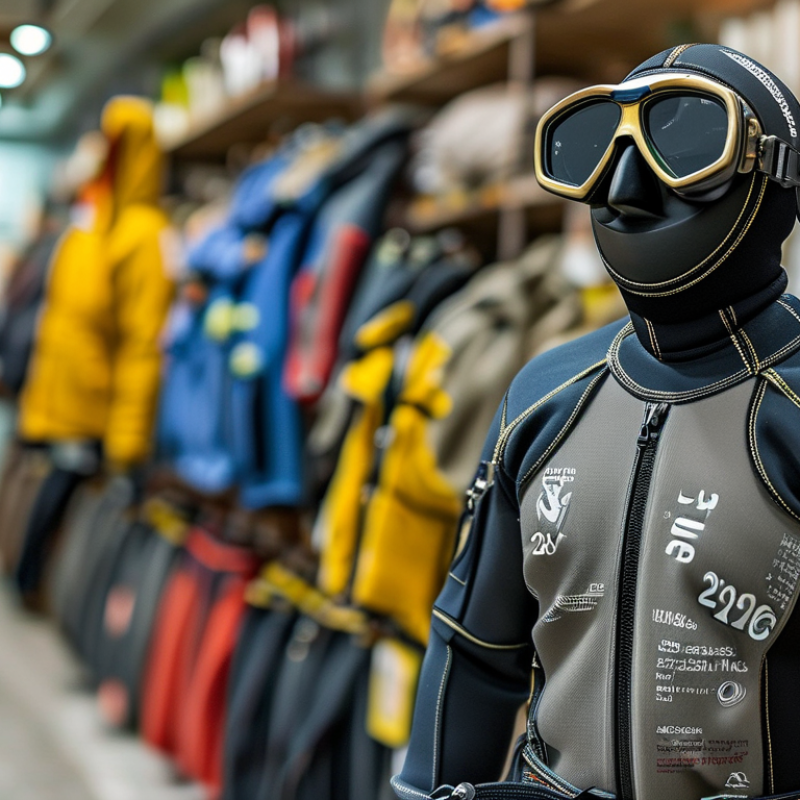
Scuba Pants Explained: 3 mm, 5 mm, and 7 mm Neoprene Applications
Scuba pants are not simply thicker versions of swimwear. Their neoprene thickness controls warmth, flexibility, and underwater comfort. In practical fitting work, 3 mm pants suit warm water, tropical dives, and active shore entries. They bend easily around the knees and hips. However, they may feel inadequate during long dives or repeated descents.
Five-millimetre neoprene offers a useful middle ground. It supports cooler water diving, seasonal changes, and divers who lose body heat quickly. Many buyers pair it with a matching top or hooded vest. The fit must remain close without restricting breathing or leg movement. Loose fabric can flush cold water through the waist and cuffs. Tight fabric can create uncomfortable pressure points. Small details matter.
Seven-millimetre pants target cold-water applications and extended exposure protection. They provide stronger insulation but feel heavier on land and less flexible underwater. Experienced buyers should check seam construction, knee reinforcement, waistband recovery, and compression performance. Supplier samples should be tested with the intended boots and upper garment. A size chart helps, but it cannot replace a real fitting session. I have seen technically strong materials fail because the pattern ignored different body shapes. That lesson deserves more attention. Global buyers should request thickness tolerances, material test records, production lead times, and clear inspection procedures before placing larger orders. Temperature ratings are useful, but personal tolerance, dive duration, activity level, and layering can change the right choice.
2026 Supplier Landscape: OEM Capacity, MOQ, Lead Times, and Export Data
For global buyers, the 2026 scuba pants market is shaped by OEM flexibility, not factory size alone. Experienced suppliers can adjust neoprene thickness, seam construction, waistband height, and logo placement. A practical OEM order often starts near 300–500 pieces per color, while complex patterns may require higher quantities. Ask whether the MOQ applies per style, color, or total order.
Lead times usually range from 30 to 60 days after approval. Custom molds, recycled fabrics, and repeated fitting changes can extend schedules. Request a size-set sample before bulk production.
Details matter. Check seam strength, stretch recovery, zipper performance, and color consistency after saltwater exposure. A supplier’s quality report is useful, but independent sample testing provides stronger evidence.
Export Data ReviewExport data can reveal seasonal demand and destination markets, yet shipment records need careful interpretation. Product descriptions may combine scuba pants with broader wetsuit categories. Compare declared quantities, shipment frequency, material descriptions, and port activity over several periods.
Supplier VerificationAsk suppliers for recent export documents, production photos, and references from comparable orders. Some factories report impressive capacity but subcontract critical operations. That is a real sourcing risk.
Confirm cutting, sewing, bonding, inspection, and packing locations through a video audit or site visit. Reality varies, especially during peak diving seasons. A reliable supplier should explain delays clearly, document corrective actions, and provide a workable production schedule rather than promise perfection.
Quality Benchmarks: EN 14225-1:2017, ISO 9001:2015, and Seam Testing
For global buyers, scuba pants should be assessed against EN 14225-1:2017 when the product falls within its scope. This standard addresses wet suit construction, performance, and test methods. Suppliers should provide clear test reports, material specifications, and size tolerances. A certificate alone is not enough.
Look closely at seam performance. Inspectors should check stitching density, seam tape adhesion, and leakage resistance after repeated flexing. A practical test includes soaking the garment, bending the knee panels, and examining inner seams for water entry. Supplier records should identify the fabric batch, thread type, operator, and inspection date. Small details matter.
ISO 9001:2015 shows that a supplier operates a documented quality management system. It does not automatically prove that every pair meets diving performance requirements. Ask how defects are isolated, corrected, and verified before shipment. Factory audits can reveal inconsistent glue lines or uneven seam pressure. These problems are easy to miss in product photos. Some suppliers present excellent paperwork but weak production evidence. That deserves reflection. An accredited laboratory should confirm disputed results, especially when test methods or product designs differ. Buyers should also review complaint records and replacement procedures. Reliability develops through repeatable controls, not confident promises.
Sustainable Materials: Recycled Nylon, Limestone Neoprene, and REACH Limits
2026 Top Scuba Pants Suppliers for Global Buyers
Sustainable scuba pants now require more than a recycled-fabric label. Textile Exchange’s Materials Market Report 2024 states that recycled fibers represented only about 7.6% of global fiber production in 2023. This shows progress, but virgin materials still dominate. Recycled nylon can reduce demand for new fossil-based inputs, especially when suppliers verify polymer content and factory traceability. Ask for Global Recycled Standard certification, transaction records, and test reports. Claims without documents remain weak.
Limestone neoprene is often promoted as a lower-petroleum alternative. However, it is still synthetic polychloroprene and may be difficult to recycle. Its real impact depends on energy use, foaming methods, durability, and end-of-life planning. UNEP reports that textiles create roughly 2–8% of global greenhouse-gas emissions. Durable scuba pants may therefore outperform cheaper products that tear after several dives. That point is easy to overlook. A full lifecycle assessment is still better than marketing language.
Tips: Request REACH test reports for every color and trim. Check applicable limits for PAHs, restricted azo colorants, and other substances under Annex XVII. Confirm material composition, supplier audits, and production-batch consistency. Do not assume limestone means low impact. Compare repairability, seam strength, and expected dive cycles before ordering. Some suppliers may provide excellent samples, yet weaker bulk production. Require independent pre-shipment testing.
Global Buyer Scorecard: Unit Cost, Incoterms, Compliance, and Warranty
2026 Top Scuba Pants Suppliers for Global Buyers
A practical supplier scorecard should compare unit cost, Incoterms, compliance, and warranty together. Unit cost alone can hide freight, insurance, packaging, and import charges. Compare delivered cost under the same order quantity and shipment route. Ask whether quoted prices include custom sizing, seam reinforcement, and labeling. Low prices can disappoint.
Incoterms clarify who controls transport risk and documentation. Confirm the named place, transfer point, and insurance responsibility in writing. Reliable suppliers should provide material specifications, production samples, inspection records, and applicable chemical-safety documentation. Check sizing consistency after washing and repeated use. Warranty terms should state coverage, claim deadlines, repair options, and replacement conditions. Vague promises are not protection. A scorecard can still mislead when buyers accept incomplete evidence. I have seen attractive quotations weaken after small details changed.
Tips: Request one pre-production sample and one packed sample. Record thickness, stretch, stitching, odor, zipper movement, and size tolerance. Use an independent inspection before final payment when order value justifies it. Keep every approved specification attached to the purchase contract. A written trail matters. Also, review warranty performance after the first delivery, not only during supplier selection. Supplier reliability is measured by response quality when something goes wrong.
2026 Top Scuba Pants Suppliers for Global Buyers - Global Buyer Scorecard: Unit Cost, Incoterms, Compliance, and Warranty
Anonymous supplier profiles based on commonly quoted international trade benchmarks for neoprene scuba pants.
| Supplier Profile | Production Region | Typical Product Scope | Indicative Unit Cost
USD / pair | Typical MOQ
pairs / style | Common Incoterms | Sample Lead Time | Production Lead Time | Compliance Documentation | Standard Warranty | Buyer Score
/ 100 |
| Profile A | East Asia | 3 mm and 5 mm neoprene pants; flatlock and blind-stitch options | $16–$28 | 300–500 | FOB, CIF, FCA | 7–12 days | 35–50 days | Material composition, colorfastness, azo-dye and REACH test reports available by order | 12 months against stitching and material defects | 88 |
| Profile B | Southeast Asia | 3 mm neoprene pants; private-label packaging and size grading | $18–$31 | 500–800 | FOB, CFR, DDP by quotation | 10–15 days | 40–55 days | REACH, CPSIA and general product safety files subject to destination market | 12 months; replacement or credit for verified production defects | 84 |
| Profile C | South Asia | 2 mm and 3 mm neoprene pants; basic colors and standard size range | $14–$24 | 500–1,000 | FOB, CFR | 12–18 days | 45–65 days | Factory quality records; chemical and product testing normally arranged by buyer | 6–12 months depending on contract terms | 78 |
| Profile D | East Asia | 5 mm and 7 mm reinforced pants; glued-and-blind-stitched construction | $29–$49 | 200–400 | FOB, FCA, CIF | 8–14 days | 45–60 days | Neoprene specification, seam-strength records and restricted-substance testing available | 18 months for seam and adhesive failures under normal use | 92 |
| Profile E | Southeast Asia | 3 mm and 5 mm pants; recycled-material options and custom panels | $22–$38 | 300–600 | FOB, CIF, DAP | 10–16 days | 40–60 days | Recycled-content evidence, REACH and colorfastness testing available on request | 12 months; limited coverage for normal wear and abrasion | 86 |
| Profile F | Eastern Europe | Small-batch technical pants; quick replenishment and custom fit adjustments | $34–$58 | 100–250 | EXW, FCA, DAP | 5–10 days | 25–45 days | EU chemical-compliance documentation and batch inspection records normally available | 24 months for manufacturing defects | 90 |
| Profile G | North Africa | 3 mm neoprene pants; European-market private-label production | $24–$42 | 250–500 | FOB, FCA, DAP | 8–14 days | 35–55 days | REACH-related documentation and final inspection reports available by project | 12 months for verified manufacturing defects | 82 |
| Profile H | Latin America | 2 mm and 3 mm pants; regional replenishment and low-volume customization | $31–$52 | 150–300 | EXW, FCA, DAP | 7–14 days | 30–50 days | Local product records; destination-market testing should be confirmed before purchase | 12 months subject to documented care and use conditions | 80 |
Scoring basis: Unit cost 25%, Incoterm flexibility 15%, lead-time reliability 15%, compliance readiness 20%, warranty coverage 15%, and MOQ suitability 10%.
Commercial note: Cost ranges are indicative export benchmarks for standard neoprene scuba pants, excluding freight, duties, testing charges, tooling, custom packaging and applicable taxes. Compliance files, warranty terms, production capacity and Incoterms must be verified directly before purchase.